
Solar for Homes
Contributing to global energy sustainability
and environmental preservation.
- Home
- Solar for Homes
Solar Energy
Solar energy refers to the power obtained by harnessing the energy emitted by the sun. This energy is captured using various technologies and can be converted into electricity or used for heating purposes. It’s promising solution to the world’s energy needs, offering a clean, renewable, and increasingly cost-effective alternative to fossil fuels. With continued innovation and supportive policies, solar power has the potential to significantly contribute to global energy sustainability and environmental preservation.
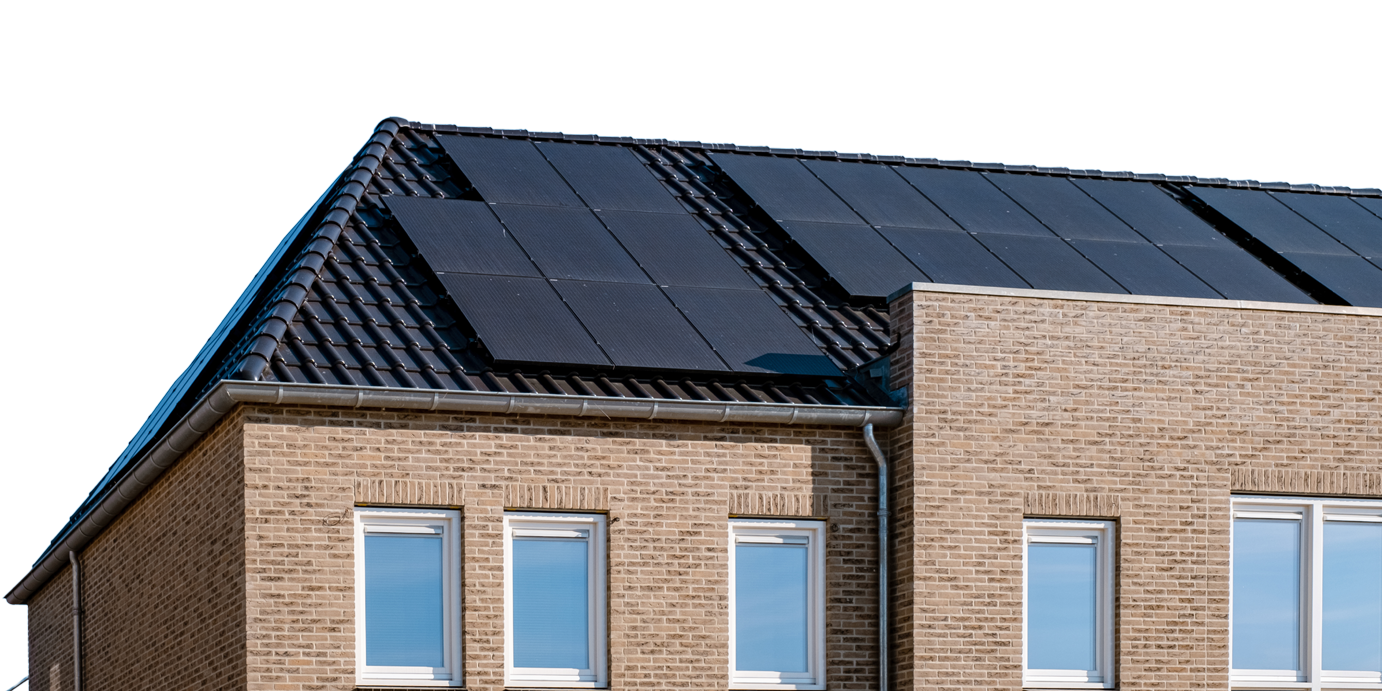
Empowering a green energy revolution
Providing sustainable solar energy solutions for a brighter future for all Malaysians
Why go Solar
Reduce Greenhouse gas emission
Solar power generates electricity without emitting harmful pollutants or greenhouse gases, helping to combat climate change.
Solar power is a sustainable resource
Solar energy is a renewable resource, meaning it won’t run out like fossil fuels, ensuring a long-term energy supply.
Lower Electricity
Bills
Installing solar panels can significantly reduce or even eliminate your electricity bills, depending on the size of your system and your energy usage.
How Solar Works

- Solar PV panels will capture the sunlight and produce direct current (DC) electricity.
- The inverter will convert the DC electricity into alternating current (AC) electricity which can be used to power up your home.
- Your home uses solar energy generated before switching back to draw from the grid, if needed.
- Any excess of solar energy is fed into the grid
Payment Method
Outright
Benefit
Immediately own your solar panel system
Upfront payment
10% deposit
Monthly payment
No
Warranty
Yes
Payment Term
Paid in Full
Easy Payment
Benefit
Leverage your favourite bank for
monthly instalments at a 0%interest rate
Upfront payment
10% deposit
Monthly payment
Fixed (subject to agreement)
Warranty
Yes
Payment Term
60 Months
FAQ
Maintenance for residential solar panels is generally minimal but important to ensure optimal performance and longevity. Regular monitoring of the generation is essential.
1. Periodic Cleaning:
Regular cleaning of solar panels is essential to remove dirt, dust, bird droppings, and other debris that can accumulate on the surface. Typical once a year is good, but many typical roof installations only need cleaning every 3 to 5 years.
2. Professional
Maintenance: While many maintenance tasks can be performed by homeowners, some may require the expertise of a professional solar installer. Climbing on the roof is a dangerous affair. Consider scheduling annual maintenance visits with a qualified technician to ensure your system remains in top condition. AmSolar provides routine maintenance at a competitive rate.
Comparing string inverters and microinverters involves weighing their respective advantages and disadvantages. Here’s a breakdown:
Microinverters:
Advantages:
- Optimized Performance: Microinverters are installed on each individual solar panel, allowing for optimization of each panel’s performance independent of the others. This can result in higher overall energy production, especially in systems with shading or panel orientation challenges.
- Flexibility: Microinverters offer greater flexibility in system design, allowing for panels with different orientations, tilts, or shading conditions to be used in the same installation without impacting overall performance.
- Safety: Microinverters typically operate at lower DC voltages compared to string inverters, reducing the risk of electrical hazards during installation and maintenance.
- Monitoring: Many microinverter systems come with monitoring capabilities that allow homeowners to track the performance of each individual panel in real-time, helping to identify and address any issues quickly.
Disadvantages:
- Cost: Microinverters are generally more expensive than string inverters, both in terms of upfront equipment costs and installation labour.
- Complexity: Installing microinverters involves more labour and wiring compared to string inverters, as each panel requires its own microinverter.
String Inverters:
Advantages:
- Cost-Effective: String inverters are generally less expensive than microinverters, making them a more budget-friendly option for solar installations and therefore better payback.
- Simplicity: They involve a simpler installation process since only one inverter is typically needed for the entire solar array, reducing installation time and complexity.
- Efficiency: String inverters are highly efficient and can effectively convert DC electricity from multiple solar panels into AC electricity.
- Maintenance: With fewer components, string inverters have lower long-term maintenance costs compared to microinverters.
Disadvantages:
- Performance Degradation: The performance of a string inverter can be affected by shading or mismatch issues. If one panel in the string is shaded or underperforming, it can reduce the output of the entire string.
- Design Limitations: String inverters are designed to handle the output of multiple panels connected in series (a string). This means they may not be ideal for installations with panels facing different orientations or with varying levels of shading.
- Safety Concerns: In a string inverter system, the DC voltage of the entire string is present at the input of the inverter. This can pose a safety risk during installation and maintenance if proper precautions are not taken.
In summary, the choice between string inverters and microinverters depends on factors such as system design, shading conditions, budget, and desired performance. String inverters may be more cost-effective and suitable for simpler installations, while microinverters offer greater flexibility and optimized performance, particularly in challenging shading or orientation scenarios.
In a normal grid-tied solar system, a battery is not typically included. These systems are designed to directly feed excess electricity generated by the solar panels back into the grid, usually in exchange for credits or compensation from the utility company through a process known as net metering.
The grid (TNB) serves as a large virtual battery, storing excess electricity generated by the solar panels during the day for use at night or when solar production is low, a separate battery storage system is not necessary in a grid-tied solar system. However, some homeowners may choose to install battery storage systems as part of their grid-tied solar setup for backup power during grid outages or to further increase self-consumption of solar energy for example in charging EV. These systems are often referred to as grid-tied solar systems with battery backup or hybrid solar systems.
Having a battery does not necessary mean that the whole house is backed up during TNB outage. Special wiring is required for desired outcome.
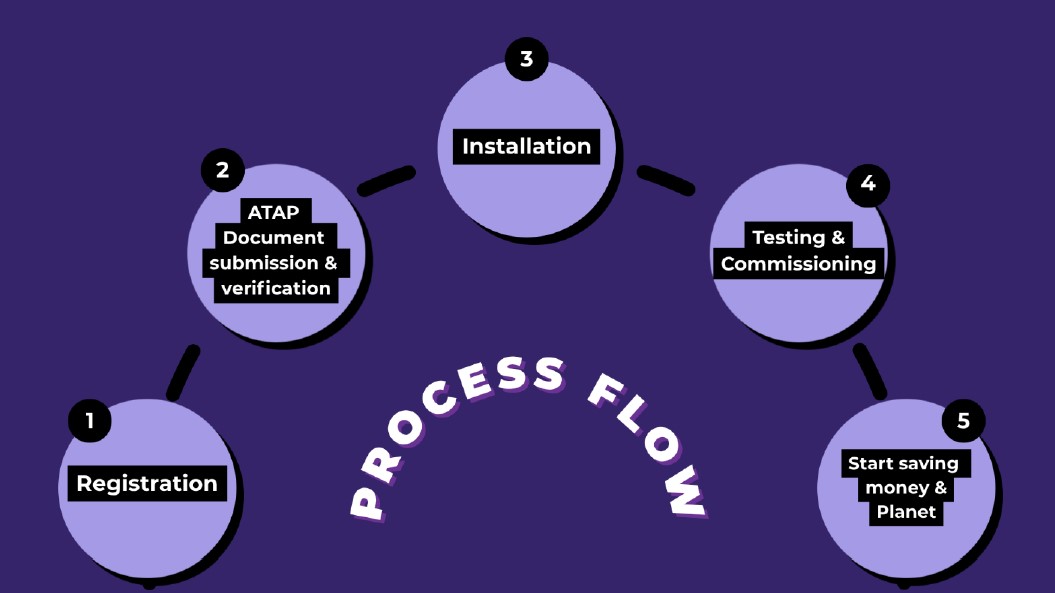
ATAP or Solar Accelerated Transition Action Programme, uses the same model as NEM however only offsets the Energy Charge from the bill. NEM stands for Net Energy Metering, which is a billing arrangement used by TNB to credit customers with rooftop solar panels for the electricity they generate and export to the grid. Here’s how the latest ATAP scheme works
1. Solar Energy Generation:
When you have solar panels installed on your property, they generate electricity during the day when exposed to sunlight.
2. Household Consumption:
The AC electricity produced by the solar panels is used to power your household appliances and devices. Any excess electricity generated that is not immediately used by your home is exported to the grid.
3. ATAP Metering:
With new ATAP metering, your utility company installs a bidirectional meter that measures both the electricity you consume from the grid and the electricity you export to the grid. The meter keeps track of the net difference between the two.
4. Billing Credits:
With the ATAP offset mechanism, excess solar energy generated during the day is exported to the TNB grid and credited to your account. These credits are then used to offset your electricity usage when solar production is low, helping you save more on your monthly electricity bill.
5. Rolling Credits:
For ATAP, excess solar energy generated is exported to the TNB grid and credited based on energy cost calculations. These credits are used to offset your electricity bill and are cleared on a monthly basis, helping homeowners maximise their solar savings.
The lifespan of a photovoltaic (PV) system depends on several factors, including the quality of the components, installation practices, maintenance, and environmental conditions. Here’s a general overview of the lifespan of key components in a PV system:
- Solar Panels: New High-quality solar panels are typically warrantied to last 30 years or more. However, many panels can continue to generate electricity well beyond their warranty period, with degradation rates for N-Type technology is 0.4 percent per year. This means that even after 30 years, solar panels can still operate at around 80% to 90% of their original efficiency.
- Inverters: Inverters are essential components of a PV system that convert DC electricity generated by the solar panels into usable AC electricity for your home. The lifespan of inverters varies depending on the type and quality, but they are typically warrantied for 5 to 10 years. It’s not uncommon for inverters to require replacement or maintenance during the lifespan of the PV system.
- Balance of System: The balance of System is made up of the mounting structure and the electrical system. These are very robust, and with best practice installation methods, they typically last a lifetime. The installation is a solid state assembly with no moving parts.
- Maintenance and Repairs: Regular maintenance and timely repairs can help extend the lifespan of your PV system. This includes tasks such as cleaning the solar panels, inspecting electrical components, checking for shading issues, and monitoring system performance. By addressing any issues promptly and keeping the system well-maintained, you can maximize its longevity and performance.
Determining the number of solar panels needed for your home depends on several factors, including your energy consumption and available roof space.
- Evaluate Your Energy Consumption: Start by reviewing your past electricity bills to understand your average monthly and annual energy consumption. Look for patterns in your energy usage and identify any seasonal variations. Read from your TNB bill to determine your average monthly kWh usage.
- Calculate your System Size: Rule of thumb solar PV generation is 100kWh per month per 1 kWp of solar panel. You can simply determine your kWp system size. Ask your service provider for the power class of the solar panel being used, and you can calculate the number of panels you need.
- Consider Other Factors: Seda’s guideline is 5kWac for single phase and 12.5kWac for three phase residence. DC ratio normally is between 1.3 to 1.5, and you can calculate the maximum kWp size. Additionally, consider your long-term energy goals and whether you want to install additional panels to offset future energy needs or increase energy independence. Adding an EV will easily require an additional 2kWp to your system size.
It’s recommended to consult with a professional solar installer who can conduct a site assessment and provide personalized recommendations based on your specific needs and circumstances. AmSolar can help you determine the optimal system size, panel configuration and placement to maximize energy production and return on investment for your home.
Solar photovoltaic (PV) systems are generally safe and reliable when installed, operated, and maintained correctly. However, like any electrical system, there are potential hazards associated with solar PV installations. Here are some common hazards to be aware of:
- Fire Risk: While solar panels themselves do not pose a significant fire risk, issues such as electrical faults, damaged wiring, or improper installation can increase the risk of fire. Regular inspections, proper wiring, and adherence to building and electrical codes can help mitigate this risk. There are a few insurance companies providing the necessary solar PV coverage, such as Allianz Insurance by Anora Agency. Alternatively, we can include the coverage into the house insurance.
To mitigate these hazards, it’s essential to follow industry best practices, adhere to applicable safety standards and regulations, provide proper training to workers, conduct regular inspections and maintenance, and consult with qualified professionals during the design, installation, and operation of solar PV systems.
If you move to a new home after installing a solar PV system, you have a few options regarding what to do with the system:
- Transfer the System to the New Home: If your new home is suitable for a solar PV system and you’re interested in continuing to benefit from solar energy, you may be able to transfer the existing system to your new property. This would involve coordinating with a solar installer to assess the feasibility of moving the panels, inverters, and other components to the new location. Keep in mind that there may be additional costs associated with uninstalling, transporting, and reinstalling the system. Seda’s quota is attached to the house owner and can be transferred along with the owner to a new home.
- Leave the System with the Existing Home: Alternatively, you could leave the solar PV system with the existing home as a selling point for potential buyers. Solar panels can increase the value of a home and make it more attractive to environmentally-conscious buyers. Be sure to communicate with your real estate agent about the presence and benefits of the solar PV system when listing your home for sale.
Before making any decisions, it’s important to consult with a AmSolar and consider factors such as the condition of the existing system, the suitability of the new home for solar, local regulations and permitting requirements, and potential financial implications.
AmSolar selected Atmoce microinverters as the core of our residential program because they provide inherent safety, superior performance, and market-leading reliab
1. Inherent Fire and Electrical Safety
- Safe Low Voltage: Traditional string inverters carry dangerous high-voltage DC current (up to 1,000V) from the roof into your home. Atmoce microinverters convert power right on the roof, meaning only safe low-voltage AC (<70VDC) runs down into your living space.
- Fire Mitigation: Every unit includes a built-in Rapid Shut Down function and operates without the risk of high-voltage DC arcs, which are a primary cause of solar-related fires.
2. Maximum Energy Yield and Efficiency
- Independent Panel Performance: In a traditional system, one shaded or soiled panel can drop the output of the entire string. With Atmoce, panels operate independently; if one is shaded by a tree or cloud, the rest continue to produce at 100% capacity.
- Panel-Level Optimization: Every single module utilizes its own Maximum Power Point Tracking (MPPT) with an efficiency of 99.9%, ensuring you get the highest possible yield from your roof regardless of orientation.
3. Industry-Leading Warranty and Reliability
- 15-Year Malaysian Warranty: We provide a 15-year warranty (extendable up to 25 years), which is currently the longest in the Malaysian market.
- Rugged Durability: Designed for extreme conditions, Atmoce microinverters feature IP67 ingress protection and a lightweight, durable housing that is built to last for decades in high-humidity environments.
4. Intelligent Monitoring and Maintenance
- ATMOZEN App Integration: You can track the performance of every individual solar panel in real-time through the ATMOZEN app.
- Easy Troubleshooting: The app features intelligent PV diagnosis with a 5-second refresh rate, allowing our support team to pinpoint issues precisely without having to check panels one-by-one on your roof.
5. Future-Proof Scalability and Battery Readiness
- Seamless Expansion: Atmoce systems are extremely easy to scale. You can add one or two panels at a time as your energy needs grow without needing to replace your entire inverter.
- Battery Ready: Every system is designed to be “Battery Ready,” allowing for easy integration with the Atmoce M-ELV battery storage system to maximize your savings under the Solar ATAP monthly reset rules.
After the end of the 10-year Net Energy Metering (NEM) contract, the terms of your agreement with TNB may vary depending on the specific regulations and policies. Here are some potential scenarios that could occur:
- Self-Consumption: You may choose to prioritize self-consumption of solar energy generated by your system to maximize energy savings and reduce reliance on grid electricity. This could involve adjusting energy usage patterns, installing energy storage systems (batteries), or implementing energy management strategies to optimize self-consumption.
- Purchase of Excess Generation: SEDA has been testing Prosumer to Prosumer model. Perhaps, then you can sell your excess energy across town through some blockchain type arrangement. This is currently tested by various GLCs.
- Self-Consumption: You may choose to prioritize self-consumption of solar energy generated by your system to maximize energy savings and reduce reliance on grid electricity. This could involve adjusting energy usage patterns, installing energy storage systems (batteries), or implementing energy management strategies to optimize self-consumption.
To understand how plug-in solar relates to the Solar ATAP program, we just need to look at two things: how you connect the panels and what happens to the extra power.
Here is how they fit together.
1. What is Plug-In Solar?
Imagine a small solar panel that you can put on your balcony or porch. Instead of hiring a big team to do heavy wiring inside your walls, this system has a standard plug.
You literally just plug it into a normal wall socket in your house. The solar power flows into that socket and feeds your home appliances directly.
2. What is the Solar ATAP Program?
In Malaysia, Solar ATAP is the official government rules for homes with solar panels.
• The Goal: It allows you to use your own solar energy first so you buy less electricity from Tenaga Nasional Berhad (TNB).
• The Extra Power: If your panels make more energy than your home is using at that exact moment, the extra flows out of your house and into the TNB grid. TNB then gives you a discount (a credit) on your monthly bill.
How Do They Relate?
Because plug-in solar systems are small and simple, they relate to the ATAP program in a few very specific ways:
• You must tell TNB: Even though it is a simple “plug-and-play” device, you cannot just plug it in secretly. Under ATAP rules, if any solar energy flows backward into the grid, you need a special two-way digital meter from TNB. If you use a standard old meter, it might miscount the exported energy and actually charge you more money!
• Sized for “Self-Consumption”: Plug-in solar systems are usually quite small. This is perfect for ATAP because the ATAP program rewards you most when you use 100% of the solar energy inside your home instantly, rather than sending it back to the grid.
• Monthly Expiry: Under ATAP rules, if you do send extra power to the grid, those credits expire at the end of every month. Because plug-in solar doesn’t make massive amounts of extra power, you don’t have to worry about wasting big credits.
The Simple Takeaway: A plug-in solar system is a great, small way to get solar power. But to stay safe and follow Malaysian law, it still needs to be registered under the Solar ATAP rules so TNB can give you the right electricity meter OR do the self-consumption installation with a smart meter. AmSolar advise that we implement Plug-In Solar as a solution for very small bills below monthly RM250 using the self-consumption method.