
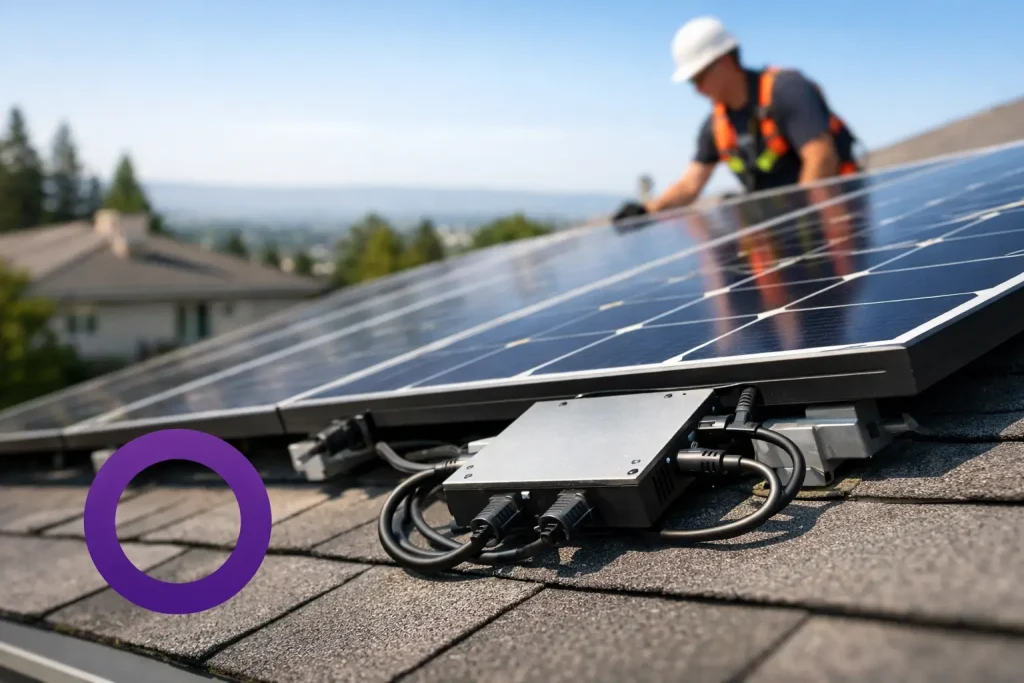
Using Micro Inverter for Safety and Simplicity
Key takeaways: Using micro inverter for safety and simplicity can reduce high-voltage DC exposure, improve module-level visibility, and make solar systems easier to expand. The trade-off is usually higher upfront equipment cost, so the right choice depends on site layout, operating goals, and lifecycle economics.
A single shaded panel can drag down a string. A single DC fault can be harder to isolate. That is why using micro inverter for safety and simplicity gets serious attention from businesses and homeowners who want a solar system that is easier to manage, safer to service, and more predictable in real-world conditions.
For many projects, the appeal is straightforward. A micro inverter converts DC to AC at each individual panel rather than sending high-voltage DC across a long string to one central inverter. That design changes both the electrical risk profile and the way the system performs over time.
Why micro inverters improve safety
The biggest safety advantage is the reduction of long-run high-voltage DC wiring. In conventional string systems, multiple panels are connected in series, which can create several hundred volts of DC across the array. DC arcs are more difficult to interrupt than AC faults, and that matters during maintenance, emergency response, or troubleshooting.
With micro inverters, power conversion happens at the module. That means the rooftop DC portion stays localized to each panel, and the system output is AC. For building owners, this can support safer maintenance practices and simplify conversations around rooftop electrical risk, especially on commercial properties where multiple contractors or facilities teams may need access over the system life.
There is also a practical operational benefit. Faults are often easier to identify at the module level. Instead of diagnosing a performance issue across an entire string, operators can pinpoint one panel or one inverter. That can reduce downtime and make service planning more efficient.
Simplicity in design and operation
Micro inverters are often described as simpler, but that needs context. They are not simpler because they have fewer components. In fact, there is an inverter on every panel. They are simpler because they remove many of the design constraints found in string sizing.
Panels can face different orientations, sit on complex roof geometry, or experience uneven shading without forcing the whole array into the same electrical behavior. On sites with fragmented roof space, multiple elevations, or future expansion plans, that flexibility can make the overall system easier to design and easier to scale.
For the end user, simplicity shows up in monitoring. Module-level data gives a clear picture of which panels are producing, which are underperforming, and whether dirt, shading, or equipment issues are affecting output. That level of visibility is valuable for asset owners who care about energy yield, warranty tracking, and ongoing operating cost control.
Where micro inverters make the most sense
Micro inverters are especially useful when roof conditions are not uniform. If one section sees morning shade, another faces a different direction, and another will be expanded later, micro inverters can preserve output better than a traditional string arrangement.
They also fit well where safety visibility matters. Schools, offices, retail buildings, and premium residential properties often value easier shutdown logic, lower DC risk exposure, and more transparent performance monitoring.
That said, not every project benefits equally. On large, open industrial roofs with consistent panel orientation and minimal shading, string inverters may still offer a stronger cost-to-performance ratio. For utility-scale layouts or highly standardized commercial installations, central or string architectures can be more economical and easier to maintain at scale.
The trade-offs business owners should understand
The main trade-off is cost. Micro inverter systems usually come with higher upfront equipment and installation costs per watt. When assessing project economics, that increase has to be weighed against gains in energy harvest, reduced mismatch losses, easier diagnostics, and potential safety advantages.
There is also the question of maintenance strategy. With module-level electronics, there are more devices installed on the roof. While modern products are highly engineered, a larger component count can affect long-term service planning. The right answer depends on product quality, environmental conditions, warranty structure, and the operator’s maintenance model.
This is why system selection should not be based on product preference alone. It should be based on engineering fit, operating risk, and financial return. A well-designed solar project looks at roof layout, shading profile, load behavior, monitoring needs, and lifecycle cost before choosing the inverter architecture.
Using micro inverter for safety and simplicity in real projects
For high-value residential projects and selected commercial systems, micro inverters can be a strong fit because they support cleaner system visibility and more adaptable design. They also align well with owners who want a complete solution rather than a lowest-cost equipment package.
For commercial and industrial decision-makers, the real question is not whether micro inverters are better in general. It is whether they improve project outcomes on your site. If they increase usable generation on a constrained roof, reduce fault-finding time, and support safer long-term operations, the higher upfront cost may be justified. If the site is uniform and optimized for string design, another architecture may produce a better return.
At Amsolar, this kind of decision is best treated as an engineering and financial exercise together. The strongest solar outcome comes from matching inverter strategy to energy usage, site conditions, and operating priorities – not from forcing every project into the same template.
If you are evaluating solar for a business facility or a premium home, micro inverters are worth considering when safety, monitoring granularity, and design flexibility matter as much as installed cost.

1 Comment
Can Balcony Panels Charge Batteries? A Practical Answer - Amsolar
[…] approach uses solar panels with a microinverter. Here, the panel output is converted to AC for household use first. If a battery is part of the […]