
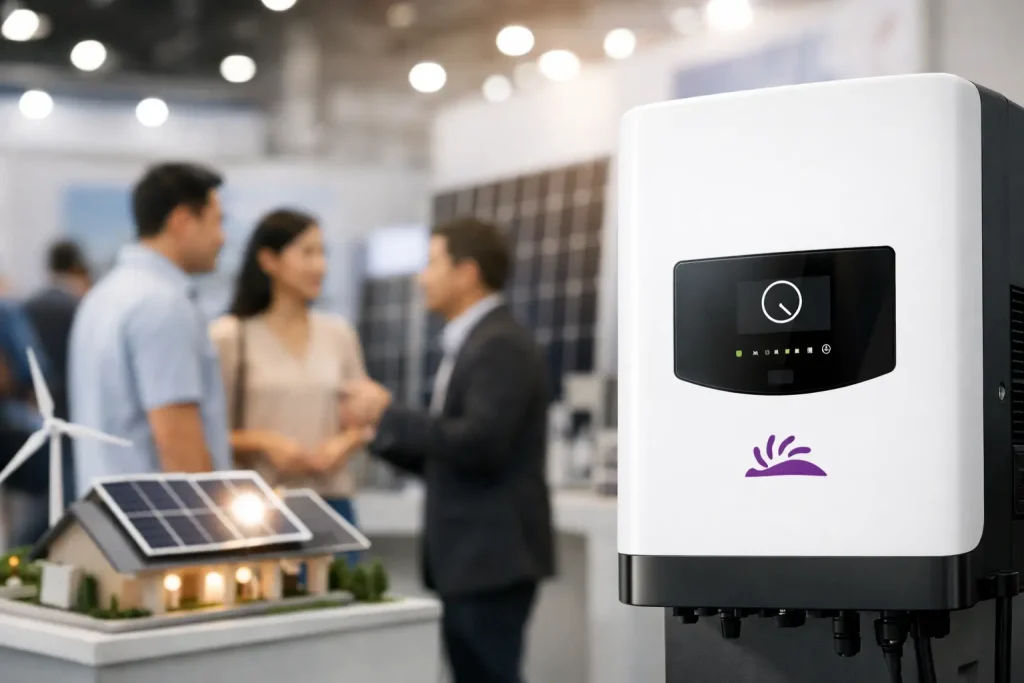
Finding Smart Suria 3K in Klang Valley Fairs
Key takeaways
If you are finding smart suria 3k in home improvement fair in the Klang Valley, the real task is not just locating a booth. It is verifying whether the offer includes proper engineering, grid compliance, monitoring, installation quality, warranty clarity, and realistic savings. A fair can help you compare vendors quickly, but the best decision usually comes from asking sharper technical and financial questions than most buyers do.
Home improvement fairs in the Klang Valley can feel productive fast. You see a solar package, a headline price, a government incentive mention, and a promise of lower bills. But when the product in question is Smart Suria 3K, a fair visit should be treated as a screening exercise, not a final procurement decision.
That matters because a 3kW residential solar system is small enough to be marketed as a simple lifestyle upgrade, yet significant enough to affect roof loading, inverter performance, generation yield, TNB application requirements, and long-term household economics. A polished booth is easy to build. A well-designed solar system is harder.
What Smart Suria 3K should mean at a fair
When people ask about Smart Suria 3K, they are usually looking for an entry-level residential solar package that is financially accessible and operationally straightforward. In practical terms, that should mean a complete home solar solution sized around 3kW, with clear information on components, installation scope, approvals, monitoring, and expected energy output.
The word “smart” should not be decorative. It should point to actual system intelligence such as app-based monitoring, visibility into generation trends, alerts for abnormal performance, and the option to integrate future energy management features. If a salesperson cannot explain what makes the package smart beyond showing a mobile app screenshot, treat that as a marketing label rather than an engineering feature.
A credible provider should also explain where 3kW fits and where it does not. For some homes, 3kW is a sensible starter system. For others, especially homes with higher daytime consumption, EV charging plans, or strong air-conditioning loads, the package may be undersized. A fair is where you identify that mismatch early.
Finding Smart Suria 3K in home improvement fair in the Klang Valley
If your goal is finding Smart Suria 3K in a home improvement fair in the Klang Valley, start by narrowing the field before you ask about price. Ask whether the package includes site assessment, structural review where needed, inverter and panel brands, TNB-related submission support, installation workmanship, system monitoring, and warranty administration.
This changes the conversation immediately. Vendors focused only on lead generation will return to discounts and rebates. Vendors with delivery capability will speak about roof orientation, shading, annual yield assumptions, and installation method. That difference is often more useful than any banner at the booth.
It also helps to ask whether the quoted package is based on a standard terrace house profile or your actual usage pattern. Many fair offers are modeled around a generic home. That is not automatically bad, but it means the savings estimate may be broad. If your bill pattern is unusual, the fair price may not reflect the best system configuration for your home.
What to check before you take a brochure seriously
A fair package becomes credible when its technical assumptions are visible. Ask for the panel wattage and quantity. A 3kW system may be built from different module combinations, and that affects roof area, aesthetics, and sometimes future expandability. Ask for inverter type too. Some homeowners benefit from string inverters, while others may need a design that handles partial shading more effectively.
Then ask about monitoring. A proper system should not leave you guessing whether it is generating as promised. Monitoring should let you see output, detect faults, and confirm that the system is operating consistently over time. Without that visibility, underperformance can go unnoticed for months.
Workmanship standards matter just as much. Ask how cables are routed, what mounting structure is used, whether waterproofing details are documented, and who performs the installation. Outsourced labor is common in the market, but oversight quality varies. The right answer is not always that everything is done in-house. The better answer is that engineering standards, supervision, testing, and commissioning are controlled properly.
The price question most buyers ask too early
It is reasonable to compare package pricing at a fair. It is not reasonable to compare prices without normalizing scope. One Smart Suria 3K offer may look cheaper because it excludes monitoring, approval support, upgraded components, or post-installation service. Another may include higher-grade hardware and more complete delivery.
That is why the better question is not, “What is your lowest price?” It is, “What exactly is included, and what assumptions are behind the savings claim?” A vendor that can answer cleanly is usually easier to work with after the contract is signed.
There is also a timing trade-off. Fair-only promotions can be genuine, but they can also create artificial urgency. If you feel pushed to commit on the spot, slow the process down. Solar is a twenty-plus-year asset decision. A one-day discount should not override design quality, warranty confidence, or installation credibility.
How to tell if the provider can deliver beyond the sale
The strongest residential solar providers do more than install panels. They understand submissions, commissioning, performance verification, and long-term support. Even for a smaller home system, that matters because the customer experience often depends less on hardware quality alone and more on whether the provider can manage the entire process without friction.
Ask what happens after installation. Who handles testing? Who helps if the monitoring app stops reporting? What is the service response path if output drops unexpectedly? If the booth team becomes vague at this point, you have learned something valuable.
This is also where engineering depth shows up. A company with broader energy expertise can usually explain not only how the solar system works today, but how it may fit future needs such as battery storage, home energy management, or smarter load control. That forward view is especially useful for higher-value homeowners who want a complete solution rather than a basic panel package.
A fair is useful, but your roof decides the outcome
One of the biggest mistakes buyers make when finding Smart Suria 3K in home improvement fair in the Klang Valley is assuming the fair package will translate directly to their house. Roof direction, tilt, shading, usable area, and switchboard condition all influence what is practical.
A west-facing roof with afternoon shading from nearby buildings may produce different economics than the promotional material suggests. A house with limited clean roof space may need a different panel layout. Even the age and condition of the roof can affect installation planning. None of this means the fair offer is misleading. It means the fair is only the start of technical validation.
So use the event for shortlisting. Gather data, compare providers, and evaluate how each company thinks. Then let the site assessment confirm whether the package is suitable as offered, needs adjustment, or should be replaced with a different system size.
What a better conversation sounds like
A serious provider will usually ask for your recent electricity bills, roof photos, property type, and basic load profile before giving a firm recommendation. That may feel less convenient than a quick verbal quote, but it is the right process. Good solar design starts with energy behavior, not booth traffic.
If the conversation goes further, you should expect practical discussion about generation yield, payback period, monitoring access, product warranty, workmanship warranty, and approval steps. You may also hear about whether the system is suitable for future expansion. That is a good sign. It shows the design is being treated as infrastructure, not just a fair promotion.
Providers with stronger technical foundations may also explain how digital monitoring and energy analytics improve ownership after installation. That is where a smart residential offer becomes more than a box price. It becomes measurable performance.
Amsolar, for example, operates from an engineering and energy-management perspective rather than treating solar as a standalone product. For homeowners who want stronger visibility, proper delivery, and a pathway to smarter energy control later, that approach tends to create better long-term value than a basic promotional package.
The best outcome from a fair visit
The best result is not leaving with the cheapest brochure. It is leaving with enough clarity to know which provider understands your home, your usage, and the technical obligations behind the sale. If a Smart Suria 3K package is right for you, that decision should stand up to questions about design, savings, compliance, and service.
A home improvement fair can shorten your research by weeks, but only if you treat it as the first filter instead of the final answer. Ask better questions, expect specific answers, and let the roof survey do the rest. The right solar system should still make sense after the booth lights are off.
