
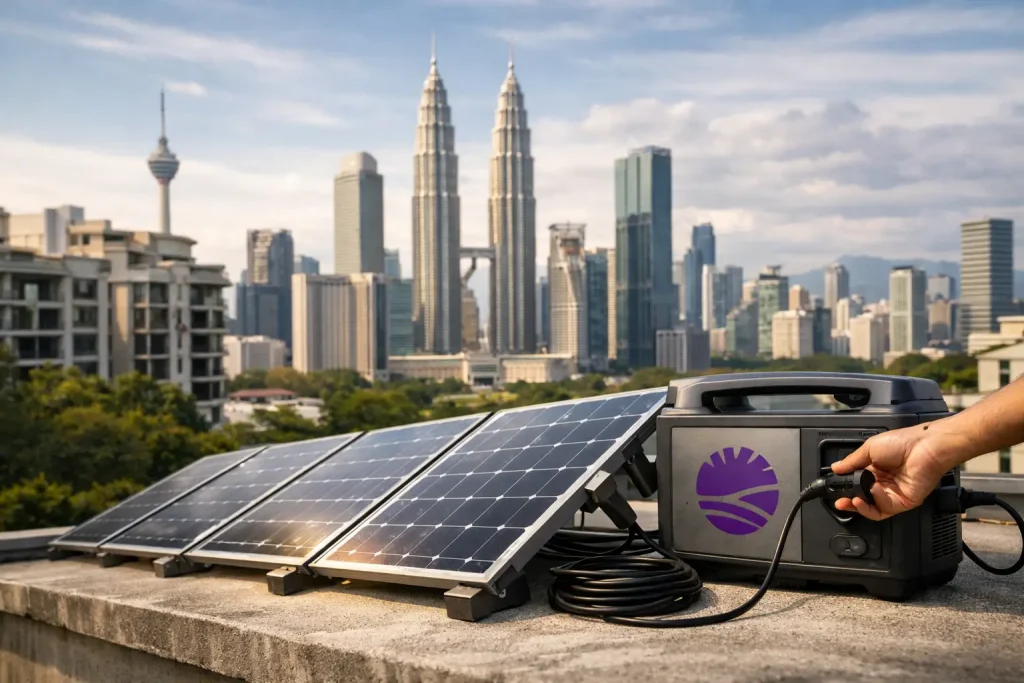
Plug In Solar for Urban Malaysia Explained
Key takeaways: Plug in solar for urban Malaysia can lower daytime electricity use for selected homes and apartments, but results depend on roof access, building rules, safety standards, and utility compliance. It works best as part of a complete energy plan, not as a one-size-fits-all shortcut.
A high-rise resident in Kuala Lumpur or Penang usually asks the same practical question first: can I reduce my TNB bill without committing to a full rooftop solar project? That is where plug in solar for urban Malaysia enters the conversation. The appeal is obvious – faster setup, lower upfront cost, and a format that feels more accessible for city homes with limited space.
But the real answer is not simply yes or no. In Malaysia’s urban setting, plug-in solar sits at the intersection of engineering, safety, building management rules, and grid requirements. If you are evaluating it for a landed home, a condo balcony, or a small urban property, the right decision depends on how the system will actually perform in your building and whether it can be deployed responsibly.
What plug in solar for urban Malaysia usually means
In practical terms, plug-in solar refers to a small-scale solar setup designed to offset part of a home’s daytime electricity demand with minimal installation complexity. It is often discussed as a simpler alternative to a fully engineered rooftop solar system with inverter integration, structural review, and regulatory submissions.
For urban Malaysia, that simplicity is both the attraction and the main source of confusion. Not every product marketed as plug-in solar is equally suitable for local conditions. Some are designed for markets with different household wiring standards, different utility rules, and very different expectations around homeowner installation.
That matters because Malaysian urban properties are not all built the same way. A landed terrace house in Johor has very different installation options from a condominium in central Kuala Lumpur. Even within the same city, one building may allow external panel mounting while another may prohibit any facade alteration.
Why city homeowners are interested
The interest is rational. Urban electricity costs are a live issue, especially for households with daytime occupancy, home offices, air conditioning demand, or electric vehicle charging plans. Many homeowners want a smaller first step before they commit to a larger PV investment.
Plug-in solar appears to answer that need. It suggests lower entry cost, faster deployment, and less structural work. For a homeowner who does not want weeks of project coordination, that can be compelling.
There is also a psychological factor. Full solar projects feel like infrastructure decisions. Plug-in products feel closer to appliances. That makes them easier to consider, even though the electrical implications can still be significant.
The main technical reality: small system, limited offset
A compact solar setup can reduce consumption, but expectations must stay grounded. A plug-in system is not likely to carry major evening loads or fully transform a home’s energy profile on its own. Its strongest use case is reducing part of the daytime base load – refrigeration, networking equipment, fans, standby loads, and selected appliances operating during solar hours.
This is where many homeowners miscalculate payback. They see the panel wattage and assume a straight line from generation to bill reduction. In reality, urban shading, panel orientation, heat, inverter behavior, and actual daytime consumption patterns all affect the result.
If your apartment balcony gets only a few hours of direct sun, the output may be too limited to justify the investment. If your landed home has clear roof exposure and strong daytime usage, the economics may be more favorable. The phrase “it depends” is not a dodge here. It is the correct engineering answer.
Safety and compliance are not optional
This is the most important part of the discussion. A solar device that connects into a home’s electrical environment should never be treated as a casual consumer gadget. The quality of the inverter, protections against electrical faults, cable standards, weather resistance, and compatibility with the home’s distribution system all matter.
In dense urban areas, safety has a wider impact. A poorly selected or improperly connected system does not just risk underperformance. It can create electrical hazards, fire risk, nuisance tripping, or conflicts with building electrical infrastructure.
That is why professional review matters, even for smaller systems. The closer a solar product gets to interfacing with your home’s circuits, the less sensible it is to treat it as a DIY shortcut. For homeowners in stratified properties, management corporation rules and facade restrictions also come into play. A technically possible installation may still be prohibited by building policy.
When plug-in solar makes sense
For some urban homes, plug-in solar can be a useful stepping stone. It tends to make the most sense where the property has reliable daytime sun, the homeowner wants to offset modest daytime loads, and the installation can be done with proper safety consideration.
It can also make sense for owners who want to start with energy visibility. Once you begin tracking daytime generation against actual usage, you get better data for future decisions. That may lead to a larger rooftop solar system, a home energy management setup, or eventually battery storage if the load profile supports it.
In that sense, small-scale solar is most valuable when it is part of a broader energy strategy. A technically progressive provider will look not just at panel placement, but at how generation, usage timing, monitoring, and future expansion fit together.
When a full residential solar system is the better choice
If your goal is meaningful bill reduction across a larger household load, plug-in solar may be too limited. A properly designed residential PV system usually delivers stronger long-term economics because it is sized to the property’s actual consumption, electrical configuration, and usable roof area.
A full system also allows for better engineering control. The array layout can be optimized, inverter selection can match demand patterns, and monitoring can provide visibility into generation and savings. Where applicable, homeowners may also assess available programs such as Suria RM3K, which can materially improve project economics for qualified residential installations in Malaysia through 2026.
For higher-value urban homes, this distinction matters. The cheapest entry point is not always the best financial choice over the life of the system. If a homeowner is already planning to stay in the property for years, wants stronger offsets, and values compliance and performance assurance, a turnkey solar solution is often the more credible path.
The role of monitoring and energy management
One of the biggest missed opportunities in residential solar is treating generation as the whole solution. It is not. Savings improve when solar is paired with visibility and control.
That is why monitoring matters even in residential settings. If you can see when your home consumes the most power, you can shift selected loads into solar production hours. If your system supports smart energy management, you can move from passive generation to active cost control.
This is especially relevant in urban Malaysia, where available installation area may be constrained. When generation capacity is limited, better usage timing becomes more valuable. Technology-led energy management can sometimes improve actual savings more than adding a small amount of extra panel capacity.
How to evaluate plug in solar for urban Malaysia before buying
Start with the building, not the product. Ask how much direct sunlight the site gets, whether the mounting area is legally and structurally usable, and whether your property type allows the installation. A condo resident should check management rules before looking at equipment specifications.
Then assess your daytime load. If your home is empty most of the day, the benefit may be modest unless you have continuous background consumption worth offsetting. If you work from home or run cooling loads during daylight hours, the value case strengthens.
Finally, verify whether the proposed setup is being treated as a proper electrical project or as a generic plug-and-play item. That difference tells you a lot about the seriousness of the provider. A credible solar partner should be able to discuss safety architecture, expected generation range, installation constraints, and future upgrade paths in clear terms.
For homeowners who want a complete solution instead of trial and error, Amsolar’s residential approach is stronger when it frames solar as part of a monitored, engineered energy system rather than a standalone panel purchase.
The smarter question to ask
The best question is not “Can I install plug-in solar?” It is “Will this system produce meaningful, safe, compliant savings for my specific urban property?” Those are not the same thing.
In Malaysia’s cities, good solar decisions come from matching technology to the realities of the site. Some homes are well suited to compact solar solutions. Others should skip the halfway step and move directly to a properly engineered PV system with monitoring and expansion potential.
If you approach the decision with real load data, realistic savings expectations, and professional technical review, you are far more likely to end up with a solar investment that performs the way it should – quietly, safely, and with measurable value month after month.

11 Comments
When Tuya Supports Edge Computing From AI Ecosystems - Amsolar
[…] a Tuya-based Home Energy Management System, that distinction matters. A home may be monitoring plug-in solar generation, household load, a battery, smart plugs, air-conditioning, or an electric vehicle charger. Some […]
Battery Power Enlargement Where Grids Are Lacking - Amsolar
[…] plug-in solar system is an accessible starting point for homeowners with suitable balcony, car-park, or open-yard space. […]
Is Plug In Solar Safe for Your Landed Home? - Amsolar
[…] Plug-in solar is designed to make solar adoption more accessible. It is typically a smaller-scale system that can support daytime household consumption without the larger footprint of a conventional rooftop array. For homeowners beginning their green-energy journey, that simplicity is appealing. It should not, however, be confused with a system that can be placed anywhere and left unchecked. […]
Cloud Based Energy Reporting for Smarter Solar - Amsolar
[…] landed-home owners using plug-in solar or a home energy management system, the same principle applies at a smaller scale. The dashboard […]
Micro Inverters Communication Protocol Comparison - Amsolar
[…] plug-in solar users, monitoring should also be understandable. The best dashboard does not overwhelm the homeowner with […]
What Causes Solar Output Loss? 8 Common Reasons - Amsolar
[…] A roof section may have adequate area but receive strong sunlight for only a limited window. For plug-in solar, a balcony location that looks open at noon may be shaded by side walls in the morning and late […]
Solar Shading Assessment Guide for Home PV - Amsolar
[…] the sunlight. Beams, decorative louvers, and nearby upper floors can create recurring shadows. For balcony plug-in solar, railing bars, balcony overhangs, and the direction the balcony faces often determine whether […]
Plug In Solar Panel Review for Landed Homes - Amsolar
[…] Plug-in solar panels are designed to produce electricity during daylight hours and reduce the amount of power a home draws from the grid at that moment. In a landed home, this can be especially relevant when daytime consumption is already present: refrigeration, Wi-Fi equipment, security systems, pool pumps, home-office equipment, or air conditioning in occupied rooms. […]
A Residential Plug In Solar Example for Landed Homes - Amsolar
[…] reduce their electricity dependence, but a full solar system can feel like a large first decision. Plug-in solar provides a more measured route. It is designed for homeowners who have usable sun exposure and want […]
Can Battery Storage Avoid Outages? What It Takes - Amsolar
[…] a home using plug-in solar on a balcony or carport, the same principle applies. Solar production can support daytime energy […]
Smart Home Energy Guide for Smarter Solar Use - Amsolar
[…] homeowners beginning their green energy journey, plug-in solar provides a practical entry point. Panels can be installed in suitable spaces such as a balcony, car […]