
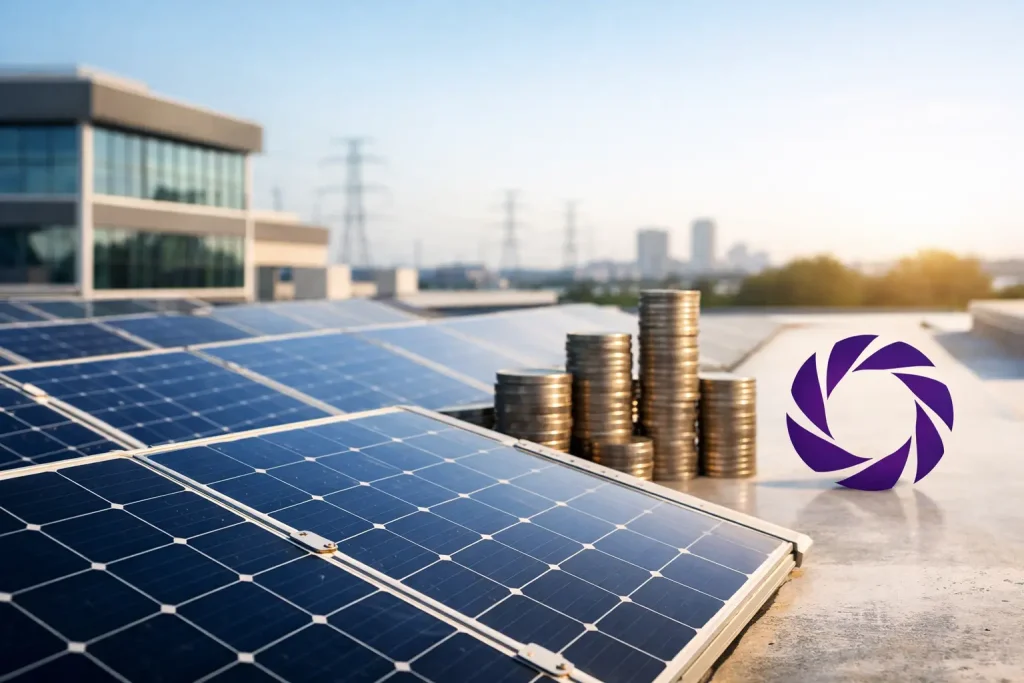
Can Solar Lower Electricity Bills for Businesses?
A factory’s electricity bill is not simply a cost of doing business. It is a monthly record of when equipment runs, how demand peaks are created, and whether the facility is buying expensive grid power when it has better options. So, can solar lower electricity bills? Yes, when the system is engineered around actual consumption, tariff structure, site conditions, and operating goals rather than a generic panel count.
Key takeaways
Solar PV can reduce the amount of electricity a business or home purchases from the grid, particularly when solar production aligns with daytime usage. The strongest results come from matching system size to interval consumption data, not just monthly bill totals.
For commercial and industrial sites, solar is most effective when it supports high daytime loads and is paired with demand management, continuous monitoring, and, where appropriate, battery energy storage. For homeowners, the result depends on daytime household use, roof suitability, applicable programs, and the right method for managing exported and self-consumed energy.
Savings are not automatic. Shading, low daytime use, poor system sizing, changing tariffs, and inadequate maintenance can all reduce project economics. A sound feasibility study should show expected savings, payback, cash flow, and the assumptions behind each figure.
How solar lowers electricity bills
Solar panels generate electricity on-site. Every kilowatt-hour used directly by the building is a kilowatt-hour that does not need to be purchased from the utility at the applicable retail rate. This is the core source of savings, often called self-consumption.
For a manufacturing plant, warehouse, office, or retail building with steady daytime demand, this can be highly valuable. Production lines, chillers, compressors, pumps, lighting, data equipment, and air conditioning frequently operate during the same hours that a rooftop PV system produces power. Rather than sending solar energy elsewhere, the site uses it immediately.
The financial result is influenced by more than annual generation. A 500 kWp system may produce a meaningful volume of energy, but its value depends on when that energy is produced and how much of it the facility can use at that moment. A site with a strong weekday daytime load profile generally captures more value than a site that is mostly active after sunset.
Solar can also improve cost predictability. Grid tariffs and fuel-related charges can change over time, while the energy produced by an installed PV system has no fuel cost. That does not eliminate every electricity charge, but it can reduce exposure to a portion of future tariff increases.
Can solar lower electricity bills for commercial sites?
For commercial and industrial decision-makers, the right question is not whether solar works in principle. It is whether the project reduces operating cost without disrupting production, creating electrical risk, or tying up capital that should be used elsewhere.
The starting point is interval data. Monthly bills show total consumption, but they do not reveal when the site uses power. Fifteen-minute or half-hourly demand data helps engineers identify daytime load, peak demand behavior, weekend patterns, and potential solar curtailment. This allows the PV system to be sized for usable generation rather than maximum roof coverage alone.
A well-designed project also considers the physical and electrical realities of the site. Roof structure, orientation, shading from nearby equipment, available switchboard capacity, cable routing, fire safety requirements, and grid interconnection conditions all affect the final design. These details are why engineering, procurement, construction, testing, and grid commissioning should be handled as one accountable scope.
Battery energy storage can add value where demand peaks, time-based energy charges, or resilience are major concerns. Solar alone reduces daytime energy purchases. A battery can store excess solar, discharge during selected periods, and support peak-shaving strategies when the economics justify it. It is not necessary for every site, however. Batteries should be evaluated through a clear financial model that accounts for cycling, degradation, controls, tariff behavior, and the specific duty required.
For organizations seeking to preserve capital, a BESS as a Service structure may be worth evaluating. A zero-capex arrangement can shift the conversation from equipment ownership to measurable energy-cost outcomes, provided the commercial terms and performance responsibilities are transparent.
The controls and monitoring that protect savings
A solar project should not be treated as a set-and-forget asset. Energy savings can drift when equipment faults go unnoticed, operating schedules change, or a facility’s load profile evolves. Cloud-based monitoring turns solar performance into an operating metric rather than an annual estimate.
Effective monitoring compares actual generation with expected generation, flags inverter or communication faults, and shows how much solar energy is being self-consumed versus exported. For facility teams, the broader value is visibility: they can see whether a new production shift, expanded cooling load, or altered operating schedule is improving or weakening solar economics.
Advanced controls can improve this further. AI-enabled energy cost control and adaptive power management can coordinate PV output, battery dispatch, and building loads against defined cost objectives. The goal is not technology for its own sake. The goal is to use energy at the least costly practical time while protecting operational continuity.
This is especially relevant for businesses with volatile demand or multiple large loads. A battery dispatched at the wrong time may deliver less value than expected. A monitored, optimized system can respond to actual conditions and maintain a record of performance for management reporting, financial review, and sustainability disclosures.
Residential savings require a different calculation
Homeowners can also lower their bills with solar, but residential economics should be assessed separately from commercial projects. A large home with daytime air conditioning, electric vehicle charging, pool equipment, or home-office use may consume a significant portion of solar production directly. A household that is empty throughout the day may need a different system size or a home energy management approach to improve self-consumption.
Roof space, shading, household consumption, and local program eligibility all matter. In Malaysia, homeowners may also wish to assess available residential options such as the Suria RM3K government rebate, effective through December 2026, alongside applicable solar programs and connection requirements. Incentives can improve upfront economics, but they should not be the only reason for proceeding. The system should still be technically appropriate for the home and expected to perform over its operating life.
A home energy management system can help residents understand where electricity is going and schedule flexible loads more intelligently. Charging an electric vehicle, operating selected appliances, or managing cooling loads during solar-producing hours can improve the value captured from the system. Battery storage can provide additional flexibility, though its financial case should be evaluated carefully rather than assumed.
Build the business case before approving the project
The best solar decision is supported by evidence. Before committing, request a proposal that defines the system capacity, expected annual generation, estimated self-consumption, tariff assumptions, expected savings, degradation allowance, maintenance scope, warranties, grid approval process, and projected payback or internal rate of return.
Be cautious of savings claims that rely on perfect weather, ignore shading, or assume all solar production will be used at full retail value. Ask what happens if operating hours change, production expands, or a building is leased or sold. A credible financial model should make these assumptions visible and allow decision-makers to test different scenarios.
Amsolar approaches this as an end-to-end energy project, combining PV engineering and certified execution with usage monitoring, financial analysis, regulatory support, and battery optimization where it creates a clear advantage. That integrated view matters because the installed capacity is only one part of the economic outcome.
Solar can be a practical way to reduce electricity costs, but the durable result comes from treating energy as a managed operating expense. Start with how the site consumes power, build the system around that reality, and keep measuring performance after commissioning.
