
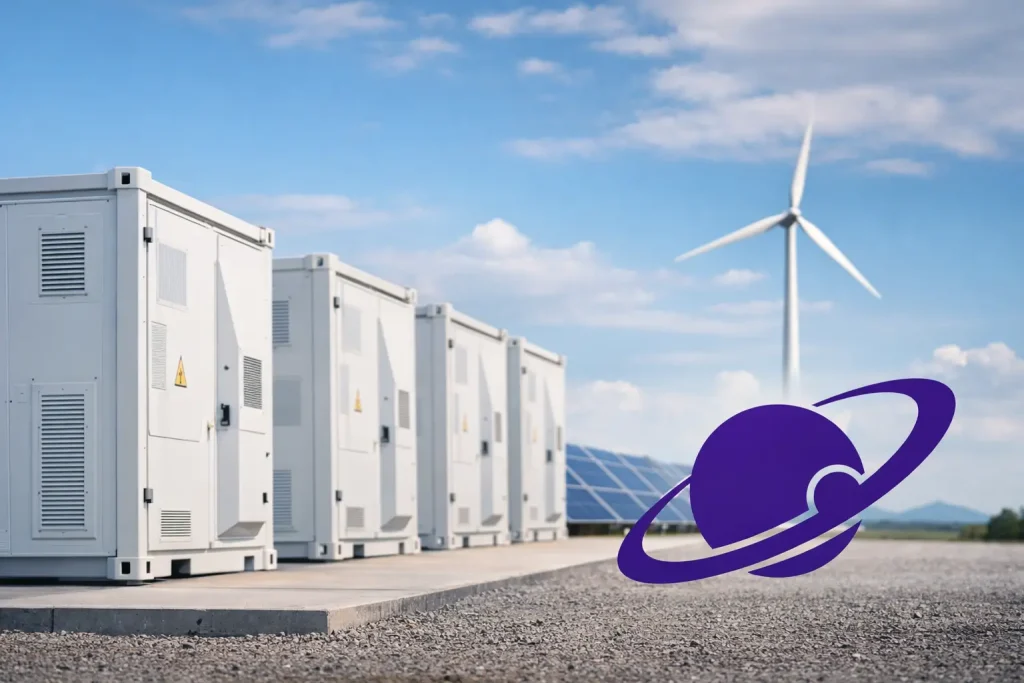
Energy Commission Malaysia Latest BESS Guidelines
Key Takeaways
- Battery energy storage systems must be planned as electrical infrastructure, not simply as an add-on to solar PV.
- The Energy Commission’s requirements place strong emphasis on competent design, protection coordination, safe installation, testing, and documented commissioning.
- For commercial and industrial sites, grid studies, operating philosophy, and fire-safety coordination can materially affect cost, timeline, and usable battery capacity.
- A BESS business case should assess demand charges, tariff periods, solar self-consumption, backup requirements, and cycling strategy together.
For decision-makers assessing a battery project, energy commission malaysia latest bess guidelines is not a research query to treat as a paperwork item. It is a project-defining issue. A battery can reduce peak demand, increase the value of onsite solar, and support critical loads during an outage. But those outcomes depend on a system that is engineered for the site, accepted by the relevant authorities, and controlled according to a clear operating strategy.
The strongest BESS projects begin with regulatory and technical planning before equipment selection. That approach protects the project schedule, improves safety, and prevents a battery from becoming an underused capital asset.
Energy Commission Malaysia Latest BESS Guidelines: What They Mean
The Energy Commission’s BESS guidance should be read as part of a wider compliance framework. A battery installation may also need to meet applicable electricity supply legislation and regulations, utility interconnection conditions, local authority requirements, fire and building requirements, and site-specific rules imposed by industrial parks, landlords, or insurers.
For commercial and industrial users, the practical implication is simple: do not assume a behind-the-meter BESS avoids review because it sits within your property boundary. Once a battery interfaces with a facility’s main electrical system, solar PV plant, generator system, or the public grid, its protection settings, fault behavior, isolation arrangements, and operational mode matter.
The guidelines direct attention to the elements that make storage fundamentally different from a standard electrical load. A BESS contains high-energy battery modules, battery management systems, power conversion equipment, thermal controls, supervisory controls, and protective devices. These components must operate as one coordinated system. A deficiency in one layer – such as inadequate ventilation, unclear emergency isolation, or poorly coordinated protection – can affect safety and project approval.
The latest published requirements and application expectations should always be verified with the relevant authorities at the start of a project. Requirements can differ depending on whether the BESS is paired with solar, intended for backup, installed at a grid-connected facility, or proposed for a more complex operating model.
Approval Starts With Engineering Evidence
A successful submission is built on evidence, not brochure specifications. Before procurement, project teams should establish the proposed single-line diagram, point of connection, battery capacity and power rating, equipment layout, cable routing, earthing design, and operating modes. These decisions shape the approval pathway and determine whether the battery can deliver its intended commercial value.
For example, a facility seeking peak shaving needs a different operating philosophy from a site seeking emergency backup. Peak shaving requires accurate load measurement, a realistic dispatch limit, and controls that respond before the facility exceeds its target demand. Backup operation requires clear identification of critical loads, transfer arrangements, islanding logic where applicable, and enough stored energy for the required outage duration.
Grid studies are particularly significant for larger C&I systems. Depending on the connection arrangement, the project may require analysis of load flow, short-circuit levels, harmonic performance, protection coordination, voltage behavior, and the risk of unintended export. A system designed only around battery nameplate capacity may fail to account for limits at the transformer, switchboard, feeder, or utility connection point.
This is also where an experienced engineering team adds value. The lowest equipment price does not necessarily produce the lowest project cost if design changes are required after submission, if switchgear upgrades emerge late, or if the battery cannot discharge at the power level assumed in the financial model.
Safety, Fire Planning, and Commissioning Cannot Be Deferred
Battery safety is a design discipline, not a final inspection task. The BESS layout should consider access control, segregation from occupied areas where appropriate, ventilation or thermal management, cable protection, emergency isolation, labeling, and maintenance access. The chosen battery chemistry, enclosure type, and manufacturer safety documentation should align with the installation environment.
Fire planning deserves early coordination with relevant stakeholders. The appropriate approach depends on the battery technology, system size, whether the unit is containerized or installed indoors, the proximity to buildings and public areas, and the expectations of local authorities and insurers. A generic fire solution should not be copied from another facility without checking the actual site conditions.
Commissioning is the point where drawings become operating infrastructure. It should demonstrate that protection devices, battery management systems, inverters, meters, emergency stops, alarms, communications, and control logic perform as designed. Functional tests should cover normal charging and discharging, alarm conditions, loss of communications, utility interruption scenarios where applicable, and safe shutdown.
Documentation also matters after energization. Facilities should retain approved drawings, test records, equipment manuals, warranty information, protection settings, operating procedures, and maintenance responsibilities. This record supports compliance, insurer discussions, future expansion, and faster troubleshooting when site conditions change.
Build the Economics Around How the Site Uses Energy
A BESS can be technically compliant and still miss its financial target. The financial model must reflect the facility’s interval load profile, tariff structure, solar generation profile, contracted capacity, operating hours, and actual constraints on battery cycling.
For many commercial and industrial facilities, value comes from managing demand peaks and improving solar self-consumption. However, the best dispatch strategy depends on the load shape. A factory with short, sharp peaks may need high discharge power for a limited duration. A cold-storage facility with sustained evening demand may value longer-duration storage. A property developer may prioritize resilience for selected loads rather than maximum demand reduction.
Battery degradation is another commercial consideration. More cycles can create more bill savings, but they also consume battery life. Temperature, depth of discharge, charging rate, and operational discipline affect long-term performance. The most credible proposals model expected usable capacity over time rather than presenting only day-one battery capacity.
For companies seeking to preserve capital, a BESS as a Service structure can be worth evaluating alongside direct ownership. The right choice depends on accounting preferences, available capital, risk appetite, expected savings, contract terms, and the organization’s ability to manage performance over the asset life.
Residential customers should evaluate the decision differently. A home battery is generally more focused on solar self-consumption, household backup priorities, and energy visibility. It should not be sized using commercial peak-shaving assumptions. Homeowners should also confirm that the proposed solar and battery arrangement suits their household connection, roof generation profile, and local approval requirements.
A Better Way to Prepare a BESS Project
The most productive first step is a site energy assessment that combines electrical data, physical constraints, and commercial objectives. Start with interval consumption data, existing single-line diagrams, solar production data if available, transformer and switchboard information, generator details, and a list of critical loads. Then define the priority: lower demand charges, higher solar utilization, backup continuity, power quality support, or a combination of these outcomes.
From there, the design team can establish a feasible battery size, required power rating, connection point, protection approach, safety layout, and preliminary financial case. This avoids a common mistake: selecting a battery package first and trying to make the site fit it later.
Amsolar approaches this work through integrated engineering, energy monitoring, financial modeling, regulatory submission support, and battery optimization. The objective is not merely to install storage. It is to give the facility a battery system that can be commissioned with confidence and measured against clear operational and financial targets.
The right BESS project is one that remains useful after approval day: safe to operate, visible through reliable monitoring, responsive to changing site demand, and built around the energy decisions your business needs to make next.
