
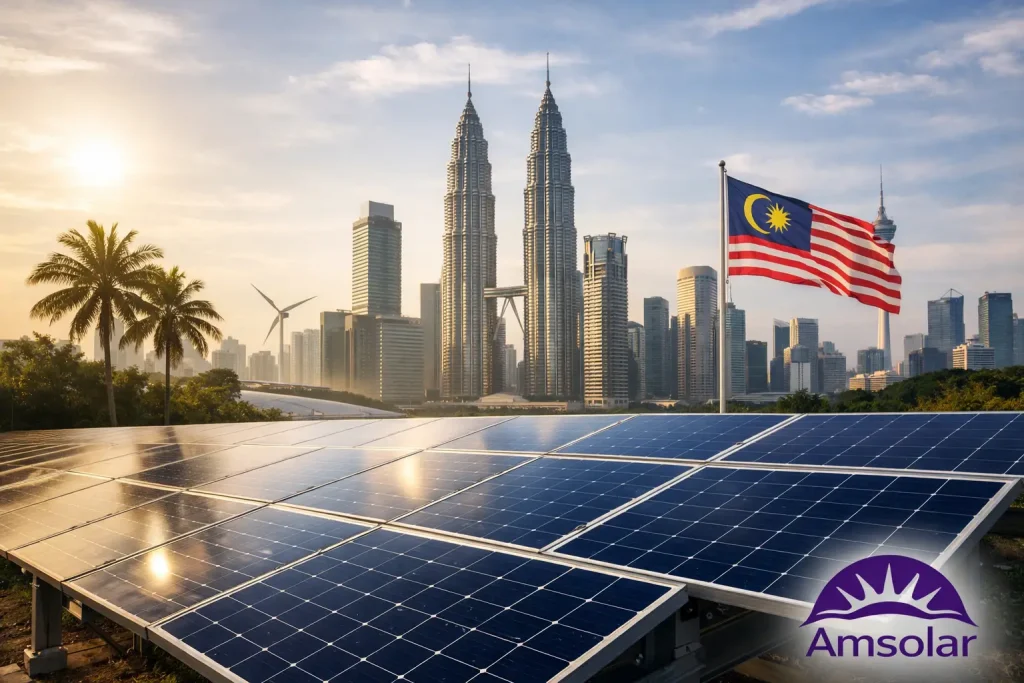
Malaysia Solar Policy Trends in 2026
Power tariffs, grid access, and incentive design now matter as much as panel pricing. That is why Malaysia solar policy trends deserve close attention from anyone planning a PV or battery investment.
Key takeaways
Malaysia solar policy trends are moving toward tighter grid coordination, more targeted incentives, and stronger emphasis on energy management rather than solar alone. For commercial and industrial buyers, the biggest policy impact is on project economics, approval strategy, and how solar pairs with battery storage and load control. For homeowners, current trends still support adoption, but rebate timing, program eligibility, and installer quality matter more than headline savings.
Why Malaysia solar policy trends matter more now
A few years ago, many buyers looked at solar mostly through one lens – module cost versus utility bill savings. That is no longer enough. Policy now shapes whether a project can export, how savings are valued, what approvals are required, and whether adding storage improves returns.
In Malaysia, this matters because the market is maturing. Regulators are balancing renewable growth with grid stability, tariff design, and system reliability. That creates opportunity, but it also creates more moving parts for factory owners, building operators, and residential customers who want a system that performs well on paper and in real operations.
For commercial users especially, policy changes can shift payback more than a small swing in equipment cost. A well-structured project with the right submission pathway, load analysis, and control strategy can outperform a cheaper installation that ignores operating patterns or interconnection constraints.
The main policy direction: from simple solar adoption to managed energy systems
The clearest shift in Malaysia solar policy trends is that the market is moving beyond basic rooftop deployment. Policymakers still want more solar capacity, but they are also paying closer attention to when energy is generated, how it interacts with the grid, and how end users manage consumption.
That has two practical effects. First, self-consumption is becoming more central to project design. Second, batteries, monitoring platforms, and adaptive controls are becoming more relevant because they help smooth demand, reduce peak exposure, and support better grid behavior.
For a commercial site, that means system sizing should not be based only on annual consumption. It should reflect daytime load shape, process-critical demand, potential future expansion, and whether peak shaving or backup resilience has value. If policy continues to reward grid-friendly behavior, businesses with flexible energy infrastructure will be in a stronger position than those relying on static solar design alone.
For residential customers, the same trend points to a more complete home energy setup. Solar still reduces bills, but the value rises when paired with smarter monitoring, controlled consumption, and in some cases battery readiness.
What commercial and industrial buyers should watch
For C&I decision-makers, policy changes usually show up in four places: tariff treatment, interconnection rules, financing viability, and compliance requirements. These are not administrative details. They determine whether a project clears internal approval.
Tariff and billing structure remain central. If your facility has a strong daytime load, rooftop solar can still produce solid savings under self-consumption logic. But if your load is irregular, seasonal, or concentrated outside solar production hours, the economics become more sensitive. That is where battery storage, load shifting, and power control can improve the business case.
Interconnection and submission requirements also deserve early attention. Approval timelines, technical documentation, and utility coordination can affect project schedules more than many finance teams expect. Businesses with multiple sites across Penang, Johor, or East Malaysia may also face different operational realities based on local grid conditions and building profiles, even when the broader policy framework is national.
This is also why engineering and regulatory support should be treated as part of project value, not overhead. A compliant design that reflects real load behavior is often the difference between modeled savings and bankable savings.
Another emerging issue is resilience. As policy discussions increasingly connect renewable deployment with grid management, battery energy storage is gaining strategic value. Not every site needs a battery today. But sites with demand spikes, sensitive operations, or future electrification plans should at least model it now. Zero capex structures for BESS can also change the capital planning conversation, especially for companies that want operational savings without heavy upfront allocation.
What residential customers should watch
Residential solar remains attractive in Malaysia, but homeowners should separate policy headlines from practical eligibility. Incentives help, yet actual value depends on roof condition, usage profile, installation quality, and program fit.
One current factor is the Suria RM3K rebate, which supports residential solar adoption through December 2026. For homeowners, that improves the entry point, but it should not lead to rushed decisions. The right question is not just whether a rebate is available. It is whether the system is properly sized, safely installed, and supported by monitoring that helps the household use power more intelligently.
Malaysia solar policy trends for homes also suggest a gradual move toward smarter energy behavior. That favors households willing to track performance, shift some consumption into solar hours, and consider home energy management rather than treating solar as a set-and-forget purchase.
High-value residential buyers usually benefit most from a complete solution: engineering, submission support, monitoring, and, where relevant, future compatibility with storage. A lower sticker price can look attractive, but poor system design or weak after-sales support often erodes returns over time.
How policy trends affect project economics
The financial story is becoming more nuanced. Solar can still produce compelling payback, but policy is pushing buyers to think beyond a simple savings estimate.
For businesses, the strongest proposals now combine technical design with financial modeling. That means evaluating IRR, payback sensitivity, operational savings, and the effect of future tariff changes. A system that looks acceptable under one tariff scenario may become much stronger if paired with peak demand reduction or AI-driven energy cost control. The reverse is also true. A project can look attractive in a basic model but underperform if export assumptions are too optimistic or load data is weak.
For homeowners, economics are usually simpler, but not always. Rebate support helps, and rising awareness of energy costs supports adoption. Still, household returns vary based on actual daytime usage and whether the family engages with monitoring tools. Homes that are empty all day may need a different setup than homes with daytime occupancy, EV charging, or larger cooling demand.
This is where technology-led design is gaining ground. Monitoring, cloud-based reporting, and adaptive control are no longer extras for only large energy users. They are becoming part of how solar projects defend their value under changing policy conditions.
The smart move in 2026
The best response to Malaysia solar policy trends is not to wait for perfect certainty. It is to plan with better data. For businesses, that means starting with interval load analysis, roof and electrical assessment, and a financial model that reflects realistic operating conditions. For homeowners, it means choosing a provider that can handle design, approval, and long-term performance support rather than just installation.
The market is rewarding buyers who think in systems, not components. Solar, battery storage, monitoring, approvals, and financial structure increasingly work as one decision. That is especially true for organizations trying to lower operating costs without adding operational risk.
Amsolar’s approach reflects that market reality: certified solar delivery supported by energy analytics, regulatory submission capability, and advanced control strategies that improve measurable outcomes. In a policy environment that is becoming more technical and more performance-driven, that kind of integration matters.
The next phase of solar growth in Malaysia will not be led by the cheapest quote. It will be led by projects that match policy direction with engineering discipline and real-world energy behavior.
