
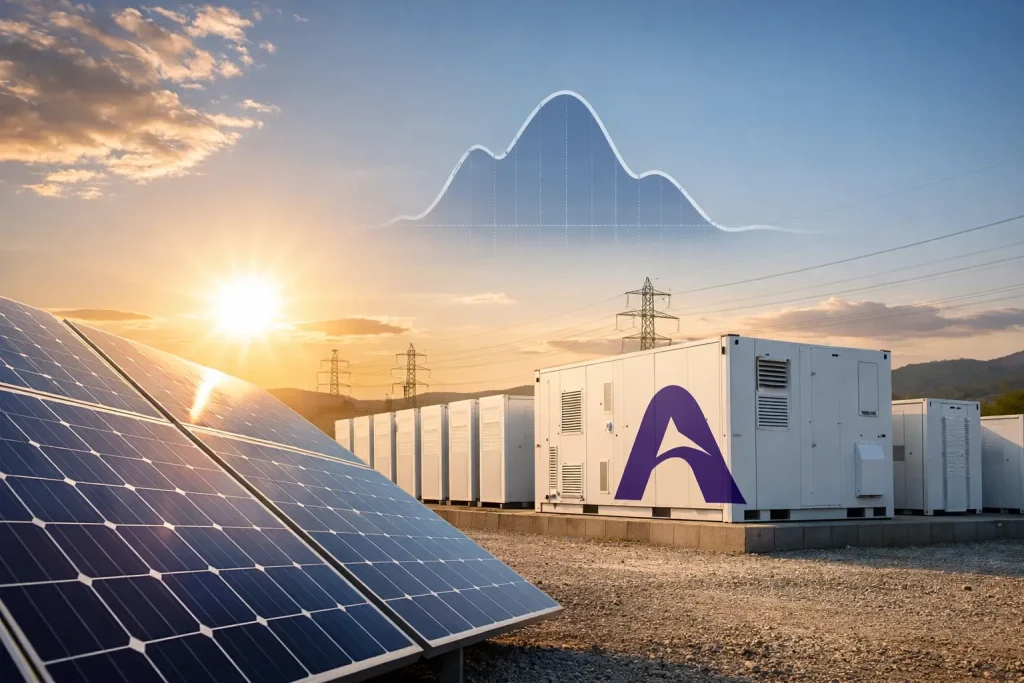
How to Optimize Peak Demand With Solar and Storage
A home’s highest electricity use often happens in a short window: the air conditioning starts, dinner is cooking, the water heater cycles on, and an EV begins charging. To optimize peak demand, homeowners need more than solar panels. They need a system designed to coordinate when electricity is generated, stored, and used.
Key takeaways:
- Peak demand is the highest amount of power your home draws at one time, typically measured in kilowatts (kW).
- Solar reduces daytime grid dependence, but battery storage and smart controls are what manage evening and high-load spikes.
- Air conditioning, EV charging, water heating, pool pumps, and kitchen appliances should be scheduled instead of competing for power.
- The right solution depends on your household load profile, roof or carport space, electricity pricing, and backup power priorities.
Why Peak Demand Matters in a Solar Home
Electricity consumption is measured in kilowatt-hours (kWh), but peak demand is about power at a specific moment. A home might use a modest amount of energy over a full day while still creating a sharp demand spike when several high-load appliances operate together.
For owners of landed homes, this pattern is common. Afternoon heat can push air conditioning harder just as household members return home, begin cooking, shower, or charge an electric vehicle. If the home has a pool pump, electric water heater, induction cooktop, or multiple air conditioning zones, the combined load can rise quickly.
Not every household pays a separate demand charge. Some electricity plans place greater emphasis on total energy use or time-based rates. Even so, reducing simultaneous high-load usage can improve the value of a solar and battery system. It helps homeowners use more of their own solar generation, reduces purchases during expensive periods, and can make battery backup last longer when the grid is unavailable.
The critical point is that solar production and household demand do not naturally occur at the same time. Solar panels produce most strongly around the middle of the day. Many homes experience their heaviest loads later, when solar output is declining. Peak-demand optimization closes that gap with better system design and active energy control.
How to Optimize Peak Demand With Solar and Storage
Start with visibility. Before selecting panel capacity or battery size, measure when your home uses power and which circuits are responsible. A monitoring platform can show whether your largest spikes come from air conditioning, water heating, EV charging, kitchen equipment, or another appliance. This is more useful than relying on monthly utility totals alone.
A well-designed photovoltaic system then supplies a meaningful portion of the daytime load. For homes with usable roof space, solar arrays can be planned around real shading conditions, orientation, inverter capacity, and expected daytime consumption. Where roof space is limited, a carport solar structure can create another productive surface while providing shade for vehicles.
Battery energy storage adds control. Rather than exporting surplus solar production in the afternoon and buying electricity later, a battery can store available solar energy for use when household demand rises. It can also limit the amount of power drawn from the grid during a short spike by supplying part of the load itself.
That does not mean every home needs the largest possible battery. A larger battery provides more stored energy and potentially longer backup duration, but it increases project cost. A smaller battery paired with intelligent control may deliver better financial value if the main goal is shaving brief evening peaks rather than operating the entire home through a long outage.
For example, a household may decide that essential circuits such as refrigeration, lighting, internet equipment, selected air conditioning, and key outlets should receive battery support. High-consumption equipment, including a large water heater or EV charger, can be shifted to daytime solar hours or limited when the battery is serving critical loads. This approach protects comfort while preventing the battery from being depleted by one avoidable load.
Coordinate Appliances Instead of Adding Capacity
The lowest-cost way to reduce a peak is often to avoid creating it. Home energy management systems can schedule, automate, or limit selected appliances based on solar production, battery state of charge, and current household demand.
Air conditioning deserves particular attention because it is often the largest recurring load in a tropical home. Smart controls can pre-cool occupied rooms when solar output is strong, then maintain a stable temperature with less effort later in the day. This is not about turning off comfort. It is about avoiding the situation where every air conditioning unit starts at full output after sunset.
EV charging is another practical opportunity. If a vehicle is parked at home during the day, charging from solar generation can be more effective than charging in the evening. When daytime charging is not possible, a managed charger can reduce its output or delay charging until other household loads have fallen. The right setting depends on driving requirements, battery capacity, and how quickly the vehicle needs to be ready.
Water heaters, pool pumps, washing machines, dryers, and dishwashers can also be timed around solar availability. These appliances should not all be automated blindly. A family’s routine matters. The goal is to establish sensible priorities, such as preserving battery capacity for evening cooling and essential circuits while moving flexible loads into lower-demand periods.
Design for the Loads You Actually Have
Peak-demand optimization is an engineering exercise, not a generic equipment package. A system designed for a small household with occasional air conditioning will look different from one serving a large home, several EVs, frequent entertaining, and all-day cooling requirements.
A proper assessment considers the home’s electrical usage pattern, roof and carport potential, appliance inventory, future loads, and desired backup capability. It should also account for how quickly the household expects a return on investment. A system that maximizes solar capacity may not always be the system that best controls peak demand. In some cases, additional monitoring, load controls, or a targeted battery configuration delivers more value than adding panels alone.
Cloud-based reporting is especially useful after installation. It allows homeowners to compare solar production, battery behavior, grid imports, and peak periods over time. If the household changes its routines, adds an EV, or installs new air conditioning, system settings can be adjusted based on real performance data rather than assumptions.
Amsolar approaches this process through solar engineering, energy monitoring, adaptive power control, and battery optimization. The objective is measurable: reduce unnecessary grid purchases, improve the use of onsite solar energy, and maintain reliable power for the loads that matter most.
Build a Home That Uses Energy Intelligently
The best time to address peak demand is before it becomes an expensive habit. A solar system should not simply generate electricity. It should give the homeowner a clearer, more controllable relationship with energy use.
Begin by identifying your biggest simultaneous loads, then decide which can be shifted, controlled, or supported by storage. With the right combination of solar generation, battery capacity, and home energy management, a landed home can reduce power spikes without making daily life less comfortable.
