
Grid Tied Versus Hybrid Solar: Which Fits?
Key takeaways: Grid-tied solar is usually the most cost-efficient choice for homes focused on reducing daytime electricity costs. Hybrid solar adds a battery for stored energy and selected backup power, but it requires a larger investment and careful load planning. The right choice depends less on panel size alone and more on your daily consumption, outage concerns, roof space, and long-term energy goals.
A home solar decision becomes more meaningful when the lights go out. That is the clearest distinction in grid tied versus hybrid solar: both can generate electricity from the sun, but only a properly designed hybrid system can store energy for use later and keep selected circuits running during a power interruption.
For landed homeowners, the best system is not automatically the one with the most equipment. It is the one engineered around how the household actually uses electricity. A family that consumes most of its power during daylight hours has different needs from a household that relies heavily on air conditioning, cooking, and electric vehicle charging after sunset.
Grid Tied Versus Hybrid Solar: The Core Difference
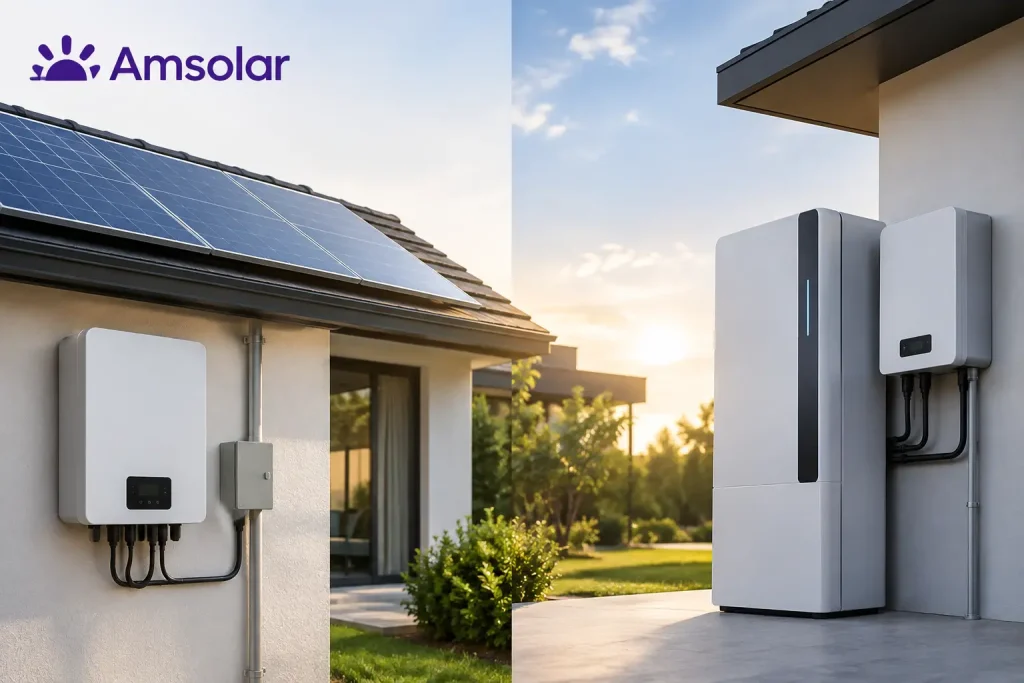
A grid-tied solar system connects solar panels and an inverter directly to the home’s electrical supply. During the day, the panels generate electricity for immediate household use. When solar generation exceeds demand, the system can export surplus electricity to the grid. When the home needs more power than the panels produce, it draws electricity from the grid as usual.
This setup has no battery. It is comparatively straightforward, efficient, and lower in upfront cost because the system does not need battery storage, a battery inverter, or backup distribution equipment. For many homes with strong daytime consumption, grid-tied solar delivers the most direct path to lower monthly electricity costs.
A hybrid solar system includes solar panels, an inverter, and a battery energy storage system. It can use solar power in real time, store excess generation in the battery, and discharge that stored energy later. Depending on the design, it can also maintain power to essential loads when the grid is unavailable.
The word “hybrid” does not mean every appliance will run during an outage. Backup performance depends on the battery capacity, inverter rating, and the loads assigned to the backup circuit. A refrigerator, Wi-Fi router, lighting, security system, and selected fans may be practical backup loads. Several large air conditioners, water heaters, and induction cooking loads can drain a modest battery quickly.
When Grid-Tied Solar Makes Better Financial Sense
Grid-tied solar is often the preferred option for homeowners whose main objective is cost reduction. It converts available roof space into daytime energy production without adding the significant cost of storage. That can make the payback profile more attractive when the home uses substantial electricity during the day.
This may include households where someone works from home, where air conditioning runs through the afternoon, or where appliances such as pumps, washing machines, and kitchen equipment are used while solar generation is high. A smart home energy management setup can further improve results by shifting flexible loads into solar hours.
Grid-tied solar is also a sensible choice when grid reliability is acceptable and backup power is not a priority. It is worth being clear about one operational point: a standard grid-tied system normally shuts down during a grid outage, even if the sun is shining. This safety function prevents solar electricity from feeding into external lines while work may be underway.
For homeowners seeking an efficient starting point, a well-sized grid-tied system can establish the foundation for smarter energy use. The design should still consider future consumption changes, such as an additional air conditioner, a growing family, or electric vehicle charging. Good engineering is not only about meeting today’s bill. It anticipates tomorrow’s load profile.
When a Hybrid System Is Worth the Extra Investment
Hybrid solar becomes compelling when energy resilience matters alongside savings. A battery gives the household more control over when solar energy is used. Instead of sending all unused midday production away, the system can reserve part of it for evening consumption or backup use.
This is particularly valuable for homes where electricity demand rises after sunset. Families are typically home then, with lighting, cooling, entertainment, cooking, and device charging happening at the same time. Solar panels alone cannot supply that demand once daylight fades, but stored energy can reduce reliance on grid electricity during those hours.
Hybrid systems can also support homeowners who want greater continuity during outages. The key is defining what must remain powered. Trying to back up the entire home can increase battery and inverter requirements substantially. Designing for essential circuits often produces a more financially disciplined result while still protecting comfort, security, and connectivity.
Battery sizing should be based on usable energy, expected nighttime loads, and desired backup duration. A battery that is too small may deliver limited practical value. One that is oversized may take longer to justify financially. This is where energy monitoring and usage data are more valuable than assumptions. A load profile shows when the home consumes electricity, which appliances drive peak demand, and where solar plus storage can make the strongest impact.
Compare Cost, Savings, and Everyday Performance
The upfront cost difference between the two systems is significant. Grid-tied solar mainly involves panels, mounting hardware, an inverter, protection equipment, and installation. Hybrid solar adds battery storage, more advanced power electronics, backup circuits, and a more involved design and commissioning process.
That does not make hybrid solar a poor financial decision. It simply means its value must be assessed differently. Grid-tied solar is generally evaluated primarily on electricity cost reduction. Hybrid solar combines energy savings with stored-energy access, improved self-consumption, and selected backup capability.
Battery economics are strongest when the battery is used intelligently rather than treated as a passive reserve. Smart controls can prioritize solar charging, manage discharge timing, avoid unnecessary cycling, and coordinate high-consumption equipment with available generation. For a home with variable usage patterns, cloud-based monitoring can reveal whether the battery is serving the intended purpose or simply sitting underutilized.
A system should also be assessed as a complete energy asset. Panel orientation, shading, roof structure, inverter capacity, household behavior, and future loads all affect outcomes. Adding a battery to a poorly sized solar system will not correct a design that fails to match the home’s actual consumption.
Choose the System Around Your Energy Priorities
Start with a simple question: is the priority lower daytime electricity costs, or lower costs plus greater control during evenings and outages? If the answer is primarily daytime savings, grid-tied solar is usually the practical choice. It uses solar energy efficiently and keeps the initial investment focused.
If reliable access to essential power is a priority, hybrid solar deserves serious consideration. It is especially relevant for homes that depend on stable internet connectivity, security equipment, refrigeration, medical devices, or regular evening electricity use. The system should be designed around the specific circuits that matter most, not a vague expectation that “the house” will remain powered.
Amsolar approaches this decision through engineering analysis rather than a one-size-fits-all package. Reviewing electricity usage, roof potential, consumption timing, and backup expectations helps determine the right solar capacity, battery size, and energy management strategy. The objective is measurable performance: lower operating costs, useful backup capability, and visibility into how the home uses energy.
The best next step is to look at your own electricity pattern over several months. Your bill shows how much energy you use, but the timing of that use determines whether a grid-tied or hybrid system will deliver more value. Choose the system that solves the energy problem you actually have, then let the equipment follow that plan.
