Solar Yield Assessment for Smarter Home Systems

Solar Yield Assessment for Smarter Home Systems

Solar Yield Assessment for Smarter Home Systems

A solar yield assessment is where a good home solar project becomes a financially sound one. For owners of landed homes, it turns a roof, carport, or balcony installation area into a realistic forecast of electricity production, bill reduction, and system performance. The result should not be a generic panel count. It should be a design decision based on how your property receives sunlight and how your household uses energy.

Key takeaways

  • Solar yield is the estimated electricity a PV system can generate over a year, expressed in kilowatt-hours.
  • Roof direction, shade, panel angle, temperature, and equipment losses all affect real output.
  • The highest panel capacity is not always the best system size for your home or budget.
  • Accurate assessment supports better financial modeling and makes future battery storage decisions more practical.

What a Solar Yield Assessment Actually Measures

Solar yield is the usable electrical energy a solar PV system is expected to produce over time. It is not simply the rated wattage printed on a solar panel. A 10 kW system describes peak capacity under controlled test conditions. Its annual yield describes what the system is likely to deliver on your specific property through changing weather, heat, shade, and normal equipment losses.

A professional assessment starts with the available installation area. For a landed home, that may be a main roof, an extension roof, a carport, or a purpose-built mounting structure. Each area can have a different orientation, tilt, shade profile, and usable surface. These details determine whether panels receive strong, consistent sunlight or only a limited window of direct exposure.

The assessment also accounts for system losses. Panels do not send every watt they generate into the home. Inverter conversion, cabling, elevated module temperature, dust, mismatch between panels, and occasional shading all reduce output. A credible yield forecast makes these losses visible instead of assuming laboratory-level performance.

This is why two homes with the same number of panels can produce meaningfully different amounts of electricity. Panel capacity matters, but site conditions determine how effectively that capacity works.

The Property Factors That Change Solar Output

Orientation is often the first factor homeowners notice. In the Northern Hemisphere, south-facing panels usually receive the most annual sunlight. However, a perfect orientation is not the only path to a worthwhile project. East- and west-facing arrays can be valuable when a household consumes more power in the morning and late afternoon. The right choice depends on the solar resource and the home’s consumption pattern, not on a single rule of thumb.

Shade deserves the same attention. A chimney, water tank, roof feature, nearby tree, or neighboring building can affect output far more than its size suggests. The key question is not whether an obstruction exists, but when it casts shade and how that shade moves across the array. A small shadow at midday can have a disproportionate impact if it repeatedly affects the same modules.

Roof geometry creates another practical trade-off. A large, simple roof plane may allow a cleaner panel layout and easier maintenance access. A fragmented roof can still support solar, but it may require multiple panel groups, careful electrical design, or different equipment choices. Carports can be particularly useful where roof space is constrained, while also providing covered parking.

Heat also matters. Solar panels need sunlight, but high operating temperatures reduce their efficiency. Good mounting design allows airflow under the modules and helps manage heat buildup. This is one reason an assessment should consider installation method, not just module wattage.

Match System Size to How Your Home Uses Energy

A yield forecast becomes more valuable when compared with actual electricity use. Reviewing monthly bills shows total consumption, but interval data from smart meters or energy monitoring provides a clearer picture of when demand occurs. A household that runs air conditioning, cooking appliances, pool pumps, or electric vehicle charging during daylight hours can use more solar electricity directly than a household that is mostly empty during the day.

Direct daytime usage typically delivers the strongest immediate value because it offsets electricity that would otherwise be purchased from the grid. Oversizing a system without understanding this consumption profile can reduce the financial efficiency of the investment. More panels may generate more energy, but that does not automatically mean proportionately higher savings.

For many homes, the best design is a balanced system that covers a meaningful share of daytime demand while leaving room for future changes. A family planning to add an electric vehicle, expand air conditioning, or work from home may have a different sizing strategy from a household with stable and modest consumption.

Battery storage can further change the calculation. A battery can retain some daytime solar energy for use after sunset, but it adds capital cost and should be evaluated against the home’s load profile, backup priorities, and expected energy savings. A solar yield assessment provides the production data needed to model that decision intelligently. Amsolar can combine this analysis with home energy monitoring and battery optimization planning, so the system is designed for measured performance rather than assumptions.

From Estimated Yield to Real-World Performance

An estimate is not a guarantee of identical monthly generation. Weather varies, consumption changes, and seasonal sunlight shifts throughout the year. The purpose of a high-quality forecast is to establish a realistic performance range and identify the assumptions behind it.

Before installation, the design should clearly show expected annual generation, anticipated losses, panel placement, inverter configuration, and the relationship between estimated production and household demand. Financial analysis should then use conservative, transparent assumptions. This gives homeowners a more useful view of payback than a headline savings figure based on ideal conditions.

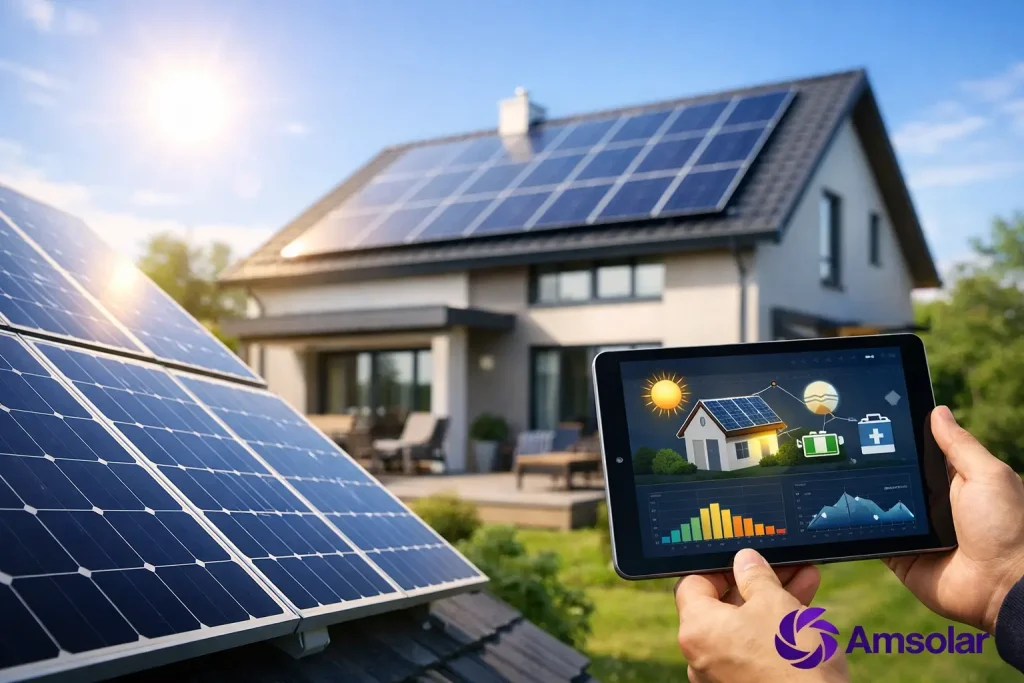
After commissioning, monitoring is what keeps the yield assessment accountable. A cloud-based platform can compare actual output with expected generation, identify unusual underperformance, and reveal whether an issue may be related to shading, equipment behavior, or changing consumption. Monitoring also helps homeowners see how much solar electricity is being produced and used in real time.

The most useful systems do more than display generation totals. They connect solar production with household usage patterns. When paired with home energy management, that visibility can guide practical changes, such as shifting flexible loads into solar hours or controlling high-consumption equipment more efficiently.

Questions Worth Asking Before You Approve a Design

Ask how the annual yield figure was calculated and what losses were included. Ask whether the installer assessed shade across different times of day, rather than relying on a quick visual check. Ask how the proposed system size aligns with your daytime consumption, not only with the physical area available for panels.

It is also reasonable to ask how the system will be monitored after installation and what production data you will be able to see. A solar system is a long-term energy asset. Its value is stronger when the homeowner can verify performance and make informed choices as household energy needs evolve.

The best solar design is not the one that looks largest on paper. It is the one that converts your available space and daily energy habits into dependable, measurable savings year after year.

Leave A Reply

Solar Yield Assessment for Smarter Home Systems

Solar Yield Assessment for Smarter Home Systems

A solar yield assessment is where a good home solar project becomes a financially sound one. For owners of landed homes, it turns a roof, carport, or balcony installation area into a realistic forecast of electricity production, bill reduction, and system performance. The result should not be a generic panel count. It should be a design decision based on how your property receives sunlight and how your household uses energy.

Key takeaways

  • Solar yield is the estimated electricity a PV system can generate over a year, expressed in kilowatt-hours.
  • Roof direction, shade, panel angle, temperature, and equipment losses all affect real output.
  • The highest panel capacity is not always the best system size for your home or budget.
  • Accurate assessment supports better financial modeling and makes future battery storage decisions more practical.

What a Solar Yield Assessment Actually Measures

Solar yield is the usable electrical energy a solar PV system is expected to produce over time. It is not simply the rated wattage printed on a solar panel. A 10 kW system describes peak capacity under controlled test conditions. Its annual yield describes what the system is likely to deliver on your specific property through changing weather, heat, shade, and normal equipment losses.

A professional assessment starts with the available installation area. For a landed home, that may be a main roof, an extension roof, a carport, or a purpose-built mounting structure. Each area can have a different orientation, tilt, shade profile, and usable surface. These details determine whether panels receive strong, consistent sunlight or only a limited window of direct exposure.

The assessment also accounts for system losses. Panels do not send every watt they generate into the home. Inverter conversion, cabling, elevated module temperature, dust, mismatch between panels, and occasional shading all reduce output. A credible yield forecast makes these losses visible instead of assuming laboratory-level performance.

This is why two homes with the same number of panels can produce meaningfully different amounts of electricity. Panel capacity matters, but site conditions determine how effectively that capacity works.

The Property Factors That Change Solar Output

Orientation is often the first factor homeowners notice. In the Northern Hemisphere, south-facing panels usually receive the most annual sunlight. However, a perfect orientation is not the only path to a worthwhile project. East- and west-facing arrays can be valuable when a household consumes more power in the morning and late afternoon. The right choice depends on the solar resource and the home’s consumption pattern, not on a single rule of thumb.

Shade deserves the same attention. A chimney, water tank, roof feature, nearby tree, or neighboring building can affect output far more than its size suggests. The key question is not whether an obstruction exists, but when it casts shade and how that shade moves across the array. A small shadow at midday can have a disproportionate impact if it repeatedly affects the same modules.

Roof geometry creates another practical trade-off. A large, simple roof plane may allow a cleaner panel layout and easier maintenance access. A fragmented roof can still support solar, but it may require multiple panel groups, careful electrical design, or different equipment choices. Carports can be particularly useful where roof space is constrained, while also providing covered parking.

Heat also matters. Solar panels need sunlight, but high operating temperatures reduce their efficiency. Good mounting design allows airflow under the modules and helps manage heat buildup. This is one reason an assessment should consider installation method, not just module wattage.

Match System Size to How Your Home Uses Energy

A yield forecast becomes more valuable when compared with actual electricity use. Reviewing monthly bills shows total consumption, but interval data from smart meters or energy monitoring provides a clearer picture of when demand occurs. A household that runs air conditioning, cooking appliances, pool pumps, or electric vehicle charging during daylight hours can use more solar electricity directly than a household that is mostly empty during the day.

Direct daytime usage typically delivers the strongest immediate value because it offsets electricity that would otherwise be purchased from the grid. Oversizing a system without understanding this consumption profile can reduce the financial efficiency of the investment. More panels may generate more energy, but that does not automatically mean proportionately higher savings.

For many homes, the best design is a balanced system that covers a meaningful share of daytime demand while leaving room for future changes. A family planning to add an electric vehicle, expand air conditioning, or work from home may have a different sizing strategy from a household with stable and modest consumption.

Battery storage can further change the calculation. A battery can retain some daytime solar energy for use after sunset, but it adds capital cost and should be evaluated against the home’s load profile, backup priorities, and expected energy savings. A solar yield assessment provides the production data needed to model that decision intelligently. Amsolar can combine this analysis with home energy monitoring and battery optimization planning, so the system is designed for measured performance rather than assumptions.

From Estimated Yield to Real-World Performance

An estimate is not a guarantee of identical monthly generation. Weather varies, consumption changes, and seasonal sunlight shifts throughout the year. The purpose of a high-quality forecast is to establish a realistic performance range and identify the assumptions behind it.

Before installation, the design should clearly show expected annual generation, anticipated losses, panel placement, inverter configuration, and the relationship between estimated production and household demand. Financial analysis should then use conservative, transparent assumptions. This gives homeowners a more useful view of payback than a headline savings figure based on ideal conditions.

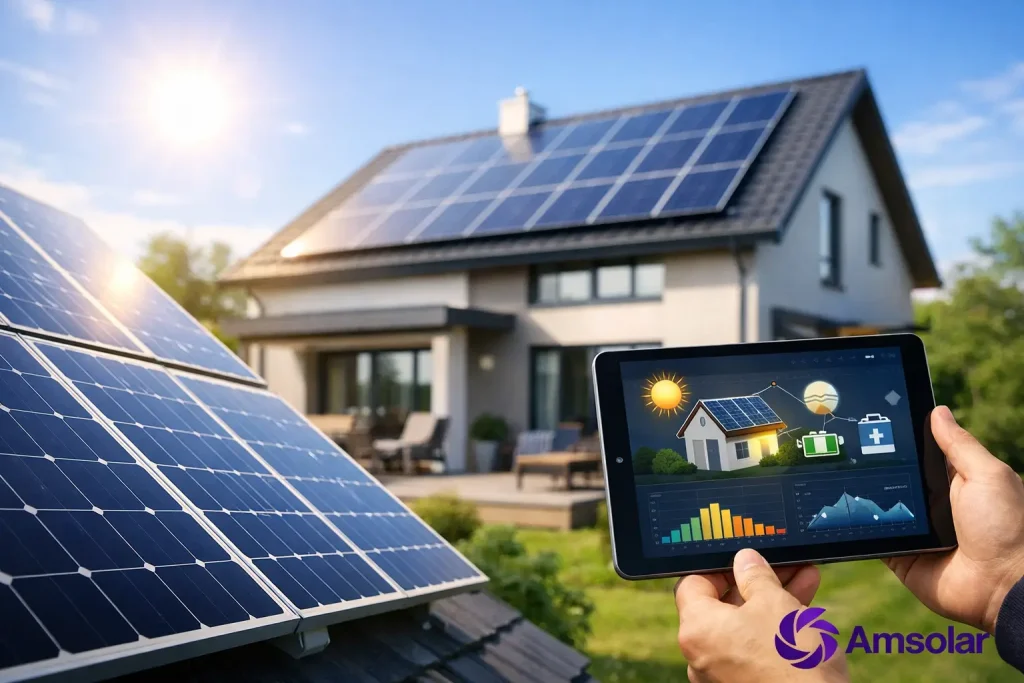
After commissioning, monitoring is what keeps the yield assessment accountable. A cloud-based platform can compare actual output with expected generation, identify unusual underperformance, and reveal whether an issue may be related to shading, equipment behavior, or changing consumption. Monitoring also helps homeowners see how much solar electricity is being produced and used in real time.

The most useful systems do more than display generation totals. They connect solar production with household usage patterns. When paired with home energy management, that visibility can guide practical changes, such as shifting flexible loads into solar hours or controlling high-consumption equipment more efficiently.

Questions Worth Asking Before You Approve a Design

Ask how the annual yield figure was calculated and what losses were included. Ask whether the installer assessed shade across different times of day, rather than relying on a quick visual check. Ask how the proposed system size aligns with your daytime consumption, not only with the physical area available for panels.

It is also reasonable to ask how the system will be monitored after installation and what production data you will be able to see. A solar system is a long-term energy asset. Its value is stronger when the homeowner can verify performance and make informed choices as household energy needs evolve.

The best solar design is not the one that looks largest on paper. It is the one that converts your available space and daily energy habits into dependable, measurable savings year after year.

Leave A Reply