
Plug In Solar Panel Review for Landed Homes
Key takeaways
- Plug-in solar is best viewed as a practical first step for reducing daytime electricity use, not a replacement for a full rooftop PV system.
- Panel placement, shade exposure, and the daytime load profile matter more than the panel’s advertised wattage alone.
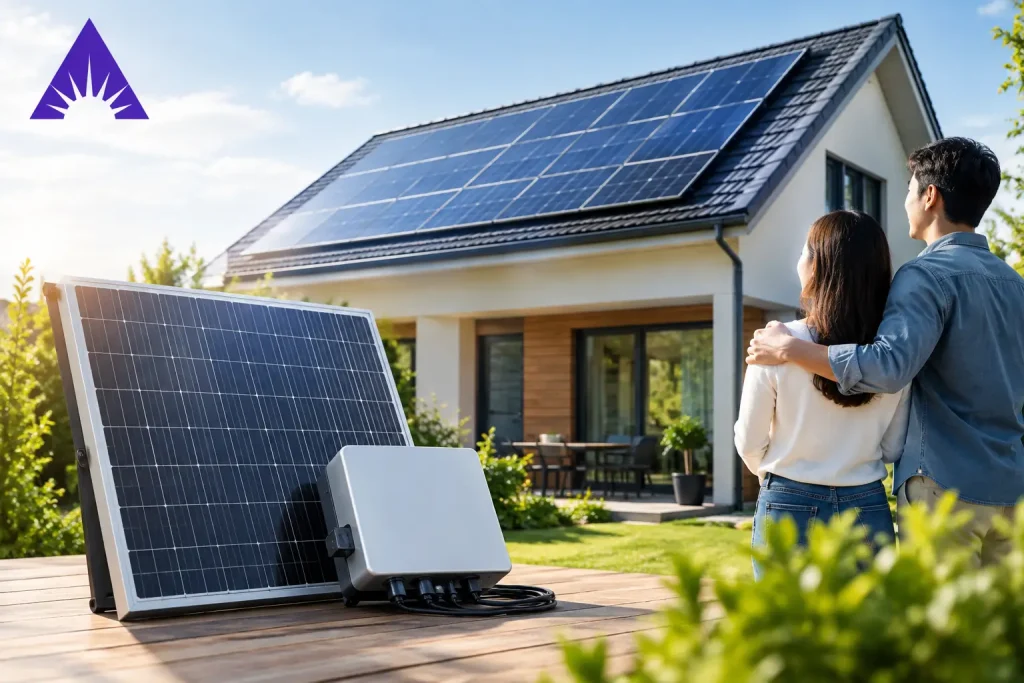
- A car porch or clear balcony at a landed home can be a useful location when it receives sustained direct sunlight.
- Monitoring turns a small solar setup into measurable energy data, helping homeowners see whether the system is delivering value.
A useful plug in solar panel review starts with one question: what electricity use can this system offset during the day? For landed-home owners, a compact solar setup can support the first move toward lower grid consumption without committing immediately to a larger rooftop installation.
The appeal is straightforward. Plug-in solar is smaller in scale, quicker to understand, and well suited to households that want visible proof of solar production before expanding. But a good decision should be based on energy output, placement, usage timing, and monitoring – not a headline wattage figure or an overly optimistic payback claim.
What Plug In Solar Is Designed to Do
Plug-in solar panels are designed to produce electricity during daylight hours and reduce the amount of power a home draws from the grid at that moment. In a landed home, this can be especially relevant when daytime consumption is already present: refrigeration, Wi-Fi equipment, security systems, pool pumps, home-office equipment, or air conditioning in occupied rooms.
This is not usually the right solution for a household expecting one or two panels to run the entire property. Solar generation changes through the day, falling during cloud cover and stopping after sunset. A small system works best when it offsets a consistent base load rather than attempting to cover heavy, intermittent demand.
That distinction is central to any realistic review. A panel may be rated at a certain output under ideal test conditions, but actual generation depends on local sunlight, heat, orientation, cable losses, and shading. Malaysia has strong solar potential, yet a shaded panel in a poorly positioned area will not deliver the performance suggested by its nameplate rating.
The Review Criteria That Actually Matter
The most useful way to assess a plug-in solar panel is to look beyond the panel itself. The system is only as effective as its installation location and the energy habits of the home.
Start with sunlight access. A car porch, open yard area, or balcony can work well if it receives long periods of direct sun. Morning-only or late-afternoon exposure can still produce energy, but it will reduce total daily output. Shade from neighboring houses, trees, roof overhangs, and architectural features can have an outsized effect, particularly on a smaller installation where every panel matters.
Next, consider orientation and tilt. The panel should be positioned to capture the strongest available sunlight through the day while remaining securely mounted. A tidy installation is not merely aesthetic. Proper positioning helps protect output, reduces avoidable shading, and supports dependable long-term use.
Finally, match generation to actual demand. If a family leaves the home empty through most weekdays and turns on high-consumption appliances only at night, the value of a small daytime solar system may be limited. If someone works from home, runs daytime cooling, or has always-on appliances, the fit is stronger. The aim is not to create solar electricity for its own sake. The aim is to use it when it is being produced.
Performance, Payback, and the Limits of Small Systems
A plug-in system can offer an accessible entry point, but its financial contribution should be evaluated at the right scale. The savings from a compact installation are generally incremental. That can still be worthwhile when the system has good sun exposure and offsets daytime consumption consistently, but it should not be presented as a shortcut to eliminating a household electricity bill.
A realistic payback assessment looks at expected annual generation, the share of that generation used by the home, equipment quality, installation scope, and future energy needs. A household that expects to add an electric vehicle charger, additional air conditioning, or a battery later may benefit from treating plug-in solar as the first stage of a broader energy plan.
This is where performance data becomes more valuable than assumptions. If a homeowner can see daily production and compare it with daytime usage, the next investment decision becomes clearer. Strong results may justify expansion. Weak results may point to a placement issue, shading problem, or a mismatch between solar generation and household routines.
Small solar systems are not inferior because they are small. They are simply more sensitive to site conditions and usage behavior. A carefully placed panel that offsets a steady daytime load can be more useful than a larger system installed without a clear purpose.
Why Monitoring Makes Plug-In Solar Smarter
For first-time solar users, monitoring is often the difference between owning a panel and understanding an energy system. Production data answers practical questions: When is the panel generating most? Is shade reducing output? Does usage rise during the same hours that solar production peaks? Is there a stronger case for additional panels or battery storage?
A home energy management system can bring this information into one view, helping homeowners identify avoidable consumption and make better use of self-generated electricity. It also supports a more disciplined approach to expansion. Rather than guessing whether more solar capacity is needed, homeowners can use actual generation and consumption patterns to plan the next step.
Amsolar applies this thinking across its solar and energy-management work: engineering, monitoring, and financial analysis should operate together. Even at plug-in scale, energy data provides the foundation for better decisions. The technology should make electricity use more visible, not create another device that is ignored after installation.
Is Plug-In Solar Right for Your Home?
Plug-in solar is a strong fit for owners of landed homes who have usable sun exposure, regular daytime electricity demand, and a desire to begin with a manageable solar investment. It is particularly practical for a clear car porch or balcony where the panel can receive dependable daylight without disrupting the home’s architecture.
It may be less compelling where the available area is heavily shaded, the household’s electricity use is concentrated at night, or the homeowner already knows that a larger rooftop system is the likely end goal. In those cases, planning the full energy pathway from the beginning can prevent duplicated work and help align solar capacity, monitoring, and future battery needs.
The best plug-in solar panel is not necessarily the one with the largest advertised wattage. It is the one placed where it can produce reliably, paired with consumption that occurs during the day, and supported by data that shows its contribution over time. Start with the conditions at your home, then let measured performance guide the next energy decision.
