
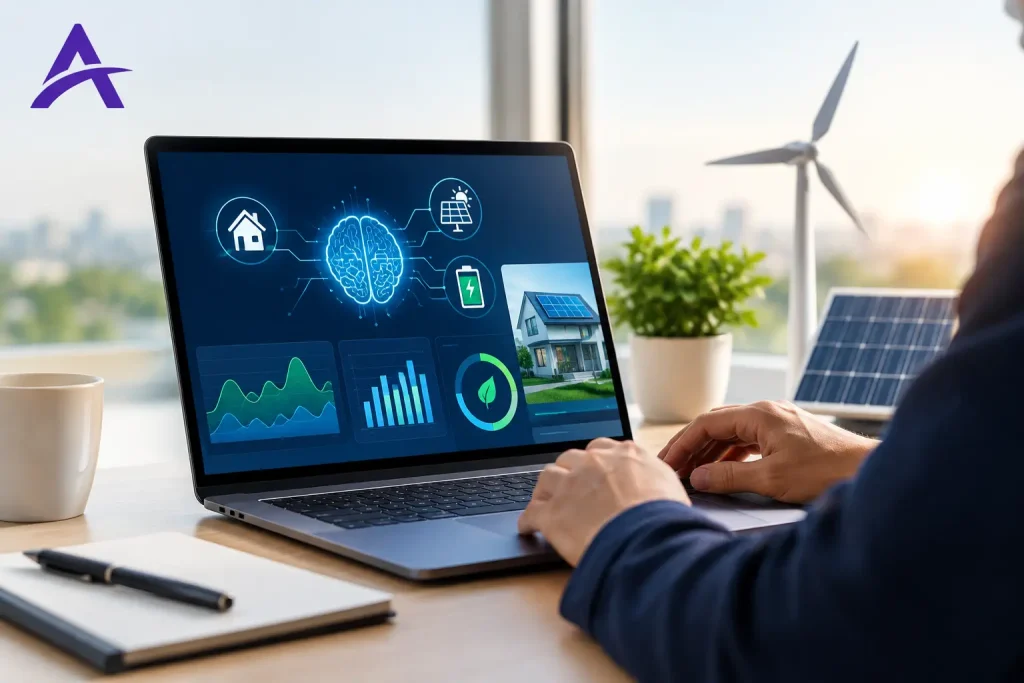
AI Energy Management Trends That Cut Energy Costs
Key takeaways
- AI is making solar systems more valuable by matching generation, battery storage, and electricity use in real time.
- The strongest results come from good system design, accurate monitoring, and controls that fit how a home or business actually operates.
- For landed homes, smart energy management can prioritize daytime solar use, reduce avoidable grid consumption, and prepare the home for battery storage.
A solar system can generate plenty of electricity and still leave savings on the table. The reason is timing. Solar production peaks when a household may be empty, while air conditioning, cooking, EV charging, and other high-demand loads often rise later in the day. That gap is why AI energy management trends are moving beyond basic production monitoring toward active control of how energy is used, stored, and purchased.
For homeowners and commercial operators, the value is practical: lower avoidable electricity costs, clearer visibility into consumption, and better use of every kilowatt-hour produced onsite. AI is not a substitute for sound electrical engineering or a correctly sized PV system. It is the intelligence layer that helps an energy system respond to changing conditions rather than simply report them.
AI Energy Management Trends Are Moving From Data to Decisions
Traditional solar monitoring answers a useful but limited question: how much energy did the system produce? Modern energy management platforms go further. They combine solar generation data with household or facility load profiles, battery status, weather forecasts, electricity pricing signals, and historical patterns.
AI can then identify when consumption is unusual, predict the likely evening load, or recommend when a battery should charge and discharge. In more advanced setups, it can automate selected decisions within predefined operating limits. For example, it may prioritize solar power for daytime appliances, preserve battery capacity for the evening, or delay a flexible load until solar generation is higher.
The shift matters because energy decisions are increasingly dynamic. A hot afternoon may increase cooling demand. Cloud cover can reduce PV output quickly. A family working from home changes the normal daytime load pattern. Static schedules cannot account for every variation. A well-configured AI system can adapt based on measured conditions.
That said, automation should be purposeful. Not every appliance needs to be controlled, and a complicated system is not automatically a better one. The best approach starts with major, flexible loads that have a clear effect on electricity use, such as EV charging, pool pumps, water heating, cooling systems, and battery charging.
Home Energy Management Is Becoming a Solar Essential
For landed homes with rooftop, car-park, or balcony solar, home energy management is becoming a logical next step after installation. Plug-in solar can be an accessible starting point for urban homeowners who want to understand their daytime electricity use before committing to a larger PV and storage system.
A home energy management system creates visibility first. It shows when the home is drawing the most power, how much solar is being consumed directly, and whether a recurring load is reducing the benefit of daytime generation. Once those patterns are clear, homeowners can make better decisions about system expansion, appliance scheduling, or battery capacity.
AI adds value when it is connected to usable controls. A dashboard alone may reveal that afternoon cooling demand is high, but it does not change the outcome. With compatible controls, the system can help coordinate selected loads around solar availability while maintaining comfort and homeowner preferences.
For example, a home with regular afternoon occupancy may benefit more from a larger solar array than from a small battery. A home with high evening usage and frequent load peaks may see a stronger case for storage. There is no universal answer. Consumption behavior, roof space, shading, load timing, and financial objectives all affect the best design.
Batteries Are Being Optimized for More Than Backup
Battery energy storage systems are often discussed as backup power. Backup remains valuable, particularly for homes and businesses that prioritize continuity. But the larger trend is using batteries as active energy assets rather than passive emergency equipment.
AI-based battery optimization determines when stored energy has the highest value. Depending on the system goals, that may mean charging from excess solar during the day, holding a reserve for essential loads, or discharging during the home’s most expensive or highest-demand period. For commercial sites, battery controls can also support demand management by reducing short, costly spikes in grid consumption.
The trade-off is battery cycling. Using a battery aggressively may increase short-term savings, but it can also affect long-term battery wear. Good optimization is not simply about discharging whenever possible. It balances savings, state-of-charge targets, battery health, backup requirements, and the owner’s operating priorities.
This is where engineering and software must work together. The battery capacity must fit the actual load profile, the inverter and protection design must support the intended operating mode, and the control logic must be transparent. A system should not make unexplained decisions that leave owners without the reserve capacity they expected.
For businesses, BESS as a Service can make this capability more accessible by reducing the need for large upfront capital expenditure. The economic case still depends on a detailed load analysis, expected savings, and operating needs. AI improves the use of storage, but it cannot compensate for a battery that is poorly sized for the site.
Forecasting, Anomaly Detection, and Adaptive Control Will Define the Next Phase
The next stage of AI energy management is less about impressive dashboards and more about early action. Forecasting models can anticipate solar output based on local weather conditions and compare that estimate against expected load. This helps the system prepare for a cloudy day, a high-demand evening, or an upcoming period of unusually low generation.
Anomaly detection is equally useful. If a home’s overnight base load suddenly increases, the system can flag a possible appliance issue, standby load, or equipment fault. At a commercial facility, an unexpected rise in energy use may point to operational changes, failing equipment, or control settings that need attention. Finding these patterns early can prevent small energy losses from becoming permanent cost leakage.
Adaptive power control is another important direction. Instead of treating every electrical load the same, the system classifies which loads are essential, which are flexible, and which can be shifted with minimal disruption. That makes energy management more precise. It also protects comfort and operations, which should never be sacrificed for minor savings.
Privacy and data quality deserve attention as well. AI recommendations are only as reliable as the data supplied to them. Incomplete metering, incorrectly labeled circuits, inconsistent connectivity, or poorly configured device integrations can produce misleading insights. Homeowners and businesses should look for systems that provide clear reporting, sensible permissions, and human support when decisions need review.
What Smart Energy Owners Should Prioritize Now
The most useful trend is not AI for its own sake. It is the combination of solar, monitoring, storage, and controls designed around real consumption. Start by understanding the load profile. Identify when electricity use rises, which appliances can be shifted, and how much solar energy is currently consumed onsite versus exported or unused.
From there, choose technology in stages. A monitored solar system may be the right first investment. Smart controls can follow when there are meaningful flexible loads. Battery storage becomes more compelling when evening consumption, resilience goals, or peak-demand management justify it. This staged approach avoids overspending on equipment before the energy data supports the decision.
Amsolar approaches this as an engineering and financial performance question, not just a hardware purchase. The objective is measurable energy cost control supported by system design, cloud-based reporting, and controls that can adapt as usage changes.
The homes and facilities that benefit most from AI will not necessarily have the most devices. They will have a clear energy strategy: produce clean power, use it intelligently, store it when it makes financial sense, and keep improving as real operating data becomes available.
