Plug In Versus Portable Solar for Landed Homes

Plug In Versus Portable Solar for Landed Homes

Plug In Versus Portable Solar for Landed Homes

Key takeaways

  • Plug-in solar is better suited to landed-home owners who want solar generation to support regular household daytime use.
  • Portable solar is best for flexible, occasional power needs, such as charging a power station, running outdoor equipment, or backup use.
  • The real decision is not panel size alone. It is about where energy will be used, how consistently it is needed, and whether the system can be monitored and expanded.
  • For households serious about lowering recurring electricity costs, a professionally designed fixed solar system offers a clearer path to measurable performance.

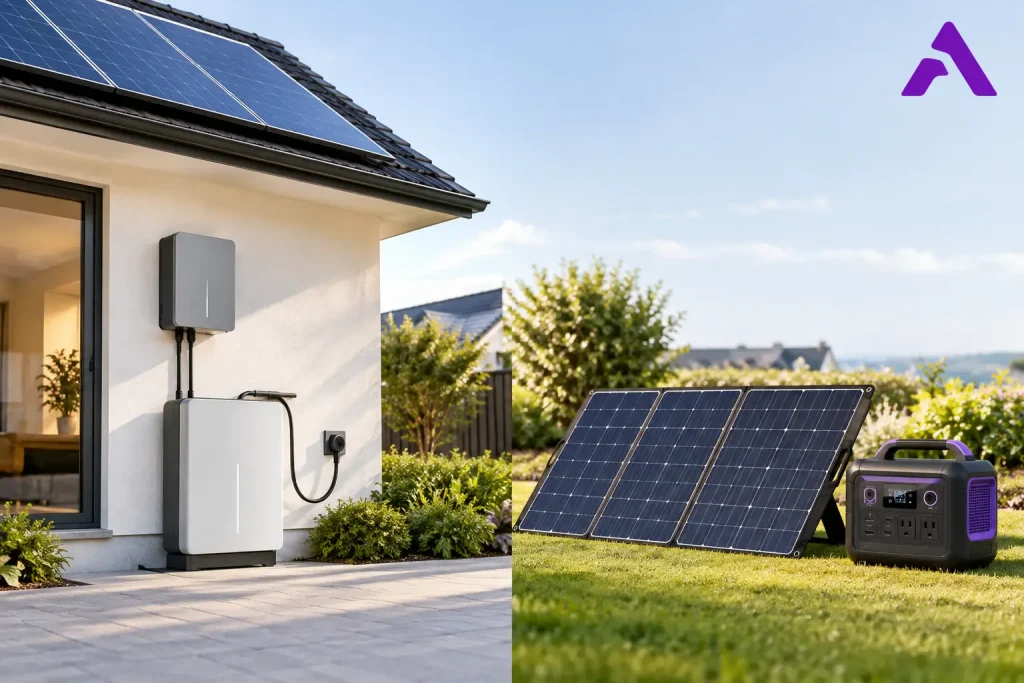
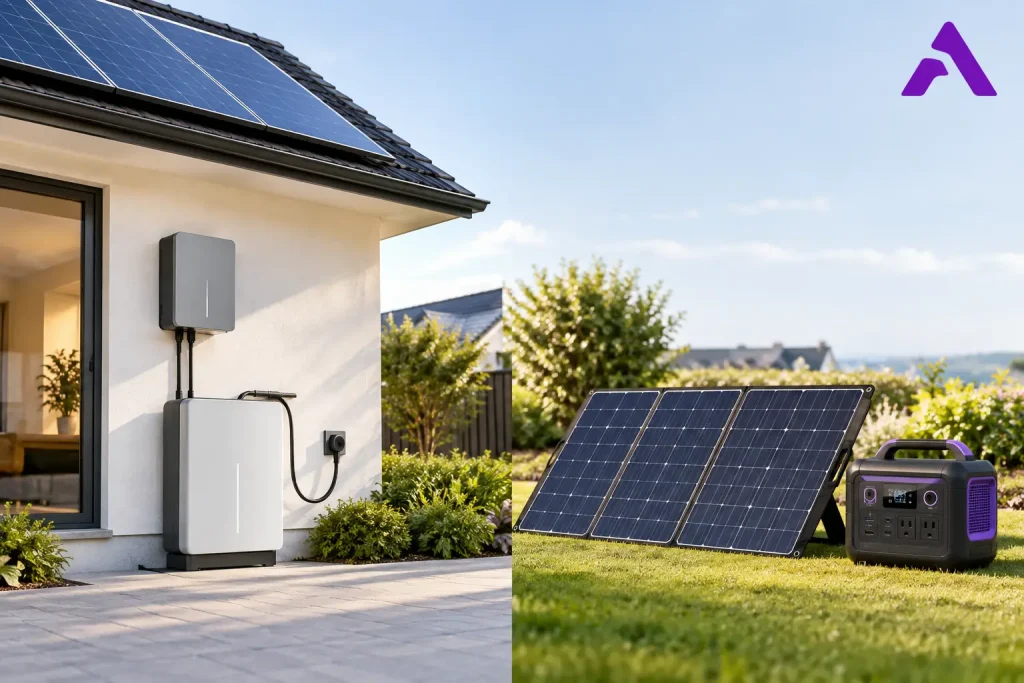
A portable panel on a driveway can charge a battery by afternoon. A plug-in solar setup can begin offsetting selected daytime household loads. That practical difference is at the center of plug in versus portable solar for owners of landed homes: one is built for flexibility, while the other is intended to become part of how the home uses energy every day.

For a first move into solar, both options have value. The better fit depends on whether you are looking for convenient solar-powered devices, a visible introduction to renewable energy, or a more deliberate way to manage household electricity consumption.

Plug In Versus Portable Solar: The Core Difference

Portable solar generally refers to movable panels that connect to a portable power station, battery pack, or compatible device. The panels can be placed in the yard, beside a car porch, or taken on a trip. Their strength is convenience. When sunlight is available, they can recharge batteries for lights, fans, small appliances, tools, and outdoor equipment.

Plug-in solar is a more fixed approach for the home. Panels are positioned where they can receive usable sunlight consistently, commonly on a car porch structure, roof area, or suitable balcony space in a landed property. Rather than being packed away after use, the system is intended to contribute energy on a recurring basis.

That distinction affects every other decision. Portable solar prioritizes mobility and simple battery charging. Plug-in solar prioritizes steady generation, practical household integration, and a more predictable view of energy savings. Neither is automatically superior, but they solve different problems.

Choose Portable Solar When Flexibility Matters Most

Portable solar is a sensible option for homeowners who want a low-commitment starting point. It can support a portable power station for occasional outages, garden work, outdoor gatherings, or charging devices away from a wall outlet. It is also useful where the preferred solar location changes through the day and the panel needs to be moved to avoid shade.

The trade-off is output consistency. A portable panel may be rated for a certain maximum wattage, but real production changes with orientation, cloud cover, heat, panel angle, and shading from trees or nearby buildings. A panel laid flat on a car porch or propped at an imperfect angle will usually deliver less than its headline rating.

Battery capacity also sets the limit. A portable setup can store only what its power station can accept and hold. It may comfortably cover phones, laptops, lighting, and selected low-power appliances, but it is not the same as supplying the broader daytime demand of a home with air conditioning, refrigeration, cooking equipment, pumps, and other regular loads.

Portable solar works best when the question is, “How can I have useful solar power where I need it?” It is less suitable when the question is, “How can I consistently reduce my monthly household energy use?”

When Plug-In Solar Makes More Financial Sense

A fixed plug-in solar solution becomes more compelling when a household has reliable daytime consumption. Homes where someone works from home, where air conditioning runs during the day, or where appliances operate steadily can make better use of solar generation as it happens.

The advantage is not simply that the panels are larger. Fixed placement allows the system to be designed around the property’s available space, likely sun exposure, and energy-use pattern. A well-positioned car porch installation, for example, can serve two functions: it creates a usable sheltered structure while generating electricity from an otherwise underused surface.

For landed homes, this can be a practical entry point before considering a larger rooftop installation. The system should still be approached as an energy asset, not a gadget. Its value comes from matching generation to real consumption, identifying avoidable waste, and measuring whether the expected cost reduction is being achieved.

This is where monitoring matters. Without visibility into production and household usage, owners may see that panels are generating power but have little clarity on how that affects their electricity costs. Energy monitoring turns solar from a visual installation into a decision-making tool. It helps reveal daytime demand, identify consumption spikes, and show whether future expansion or battery storage would add value.

Compare the Day-to-Day Ownership Experience

Portable solar asks more from the owner. Panels may need to be carried out, positioned, adjusted, packed away, and protected from poor weather or accidental damage. For some users, that is part of the appeal. The system is hands-on and adaptable.

Plug-in solar asks more from the design and installation stage, then less from the owner afterward. Once the system is appropriately positioned and commissioned, its role is to generate quietly in the background. The owner’s attention shifts from moving equipment to reviewing performance and using electricity more intelligently.

Maintenance expectations differ as well. Portable panels are exposed to more handling, cable movement, and storage cycles. Fixed panels require periodic visual checks and cleaning when dirt buildup affects production, but they avoid daily setup. Quality components, careful cable management, and professional electrical workmanship are especially important for a fixed system because it is intended to perform repeatedly over years, not just on weekends.

Weather resilience is another practical consideration in Malaysia. Strong sun is useful, but heat, heavy rain, and humidity place demands on solar equipment. A fixed system should be selected and installed with long-term site conditions in mind. The lowest purchase price is not always the lowest lifetime cost if performance, durability, and support are compromised.

Start Small, but Plan for Smarter Energy Use

A plug-in setup does not need to be the final destination. It can be a first step in a wider home energy strategy that may later include expanded solar capacity, intelligent load control, home energy management, or battery storage. The important point is to avoid buying equipment that creates a dead end.

Before choosing, assess three things: your usable sun-facing space, your daytime electricity habits, and the loads you want solar to support. A household that only needs occasional device charging may be well served by portable solar and a power station. A household aiming to reduce regular electricity spending should evaluate a fixed solution with output monitoring and a clear performance model.

Amsolar approaches this decision through engineering and measurable energy outcomes, not panel specifications alone. The right system should account for site conditions, expected generation, household consumption behavior, and the potential to add smarter controls over time.

Solar becomes most valuable when it fits naturally into the way a home operates. Choose portable solar if flexibility is the priority. Choose plug-in solar when you are ready for solar power to do consistent work for your home, day after day.

Leave A Reply

Plug In Versus Portable Solar for Landed Homes

Plug In Versus Portable Solar for Landed Homes

Key takeaways

  • Plug-in solar is better suited to landed-home owners who want solar generation to support regular household daytime use.
  • Portable solar is best for flexible, occasional power needs, such as charging a power station, running outdoor equipment, or backup use.
  • The real decision is not panel size alone. It is about where energy will be used, how consistently it is needed, and whether the system can be monitored and expanded.
  • For households serious about lowering recurring electricity costs, a professionally designed fixed solar system offers a clearer path to measurable performance.

A portable panel on a driveway can charge a battery by afternoon. A plug-in solar setup can begin offsetting selected daytime household loads. That practical difference is at the center of plug in versus portable solar for owners of landed homes: one is built for flexibility, while the other is intended to become part of how the home uses energy every day.

For a first move into solar, both options have value. The better fit depends on whether you are looking for convenient solar-powered devices, a visible introduction to renewable energy, or a more deliberate way to manage household electricity consumption.

Plug In Versus Portable Solar: The Core Difference

Portable solar generally refers to movable panels that connect to a portable power station, battery pack, or compatible device. The panels can be placed in the yard, beside a car porch, or taken on a trip. Their strength is convenience. When sunlight is available, they can recharge batteries for lights, fans, small appliances, tools, and outdoor equipment.

Plug-in solar is a more fixed approach for the home. Panels are positioned where they can receive usable sunlight consistently, commonly on a car porch structure, roof area, or suitable balcony space in a landed property. Rather than being packed away after use, the system is intended to contribute energy on a recurring basis.

That distinction affects every other decision. Portable solar prioritizes mobility and simple battery charging. Plug-in solar prioritizes steady generation, practical household integration, and a more predictable view of energy savings. Neither is automatically superior, but they solve different problems.

Choose Portable Solar When Flexibility Matters Most

Portable solar is a sensible option for homeowners who want a low-commitment starting point. It can support a portable power station for occasional outages, garden work, outdoor gatherings, or charging devices away from a wall outlet. It is also useful where the preferred solar location changes through the day and the panel needs to be moved to avoid shade.

The trade-off is output consistency. A portable panel may be rated for a certain maximum wattage, but real production changes with orientation, cloud cover, heat, panel angle, and shading from trees or nearby buildings. A panel laid flat on a car porch or propped at an imperfect angle will usually deliver less than its headline rating.

Battery capacity also sets the limit. A portable setup can store only what its power station can accept and hold. It may comfortably cover phones, laptops, lighting, and selected low-power appliances, but it is not the same as supplying the broader daytime demand of a home with air conditioning, refrigeration, cooking equipment, pumps, and other regular loads.

Portable solar works best when the question is, “How can I have useful solar power where I need it?” It is less suitable when the question is, “How can I consistently reduce my monthly household energy use?”

When Plug-In Solar Makes More Financial Sense

A fixed plug-in solar solution becomes more compelling when a household has reliable daytime consumption. Homes where someone works from home, where air conditioning runs during the day, or where appliances operate steadily can make better use of solar generation as it happens.

The advantage is not simply that the panels are larger. Fixed placement allows the system to be designed around the property’s available space, likely sun exposure, and energy-use pattern. A well-positioned car porch installation, for example, can serve two functions: it creates a usable sheltered structure while generating electricity from an otherwise underused surface.

For landed homes, this can be a practical entry point before considering a larger rooftop installation. The system should still be approached as an energy asset, not a gadget. Its value comes from matching generation to real consumption, identifying avoidable waste, and measuring whether the expected cost reduction is being achieved.

This is where monitoring matters. Without visibility into production and household usage, owners may see that panels are generating power but have little clarity on how that affects their electricity costs. Energy monitoring turns solar from a visual installation into a decision-making tool. It helps reveal daytime demand, identify consumption spikes, and show whether future expansion or battery storage would add value.

Compare the Day-to-Day Ownership Experience

Portable solar asks more from the owner. Panels may need to be carried out, positioned, adjusted, packed away, and protected from poor weather or accidental damage. For some users, that is part of the appeal. The system is hands-on and adaptable.

Plug-in solar asks more from the design and installation stage, then less from the owner afterward. Once the system is appropriately positioned and commissioned, its role is to generate quietly in the background. The owner’s attention shifts from moving equipment to reviewing performance and using electricity more intelligently.

Maintenance expectations differ as well. Portable panels are exposed to more handling, cable movement, and storage cycles. Fixed panels require periodic visual checks and cleaning when dirt buildup affects production, but they avoid daily setup. Quality components, careful cable management, and professional electrical workmanship are especially important for a fixed system because it is intended to perform repeatedly over years, not just on weekends.

Weather resilience is another practical consideration in Malaysia. Strong sun is useful, but heat, heavy rain, and humidity place demands on solar equipment. A fixed system should be selected and installed with long-term site conditions in mind. The lowest purchase price is not always the lowest lifetime cost if performance, durability, and support are compromised.

Start Small, but Plan for Smarter Energy Use

A plug-in setup does not need to be the final destination. It can be a first step in a wider home energy strategy that may later include expanded solar capacity, intelligent load control, home energy management, or battery storage. The important point is to avoid buying equipment that creates a dead end.

Before choosing, assess three things: your usable sun-facing space, your daytime electricity habits, and the loads you want solar to support. A household that only needs occasional device charging may be well served by portable solar and a power station. A household aiming to reduce regular electricity spending should evaluate a fixed solution with output monitoring and a clear performance model.

Amsolar approaches this decision through engineering and measurable energy outcomes, not panel specifications alone. The right system should account for site conditions, expected generation, household consumption behavior, and the potential to add smarter controls over time.

Solar becomes most valuable when it fits naturally into the way a home operates. Choose portable solar if flexibility is the priority. Choose plug-in solar when you are ready for solar power to do consistent work for your home, day after day.

Leave A Reply