
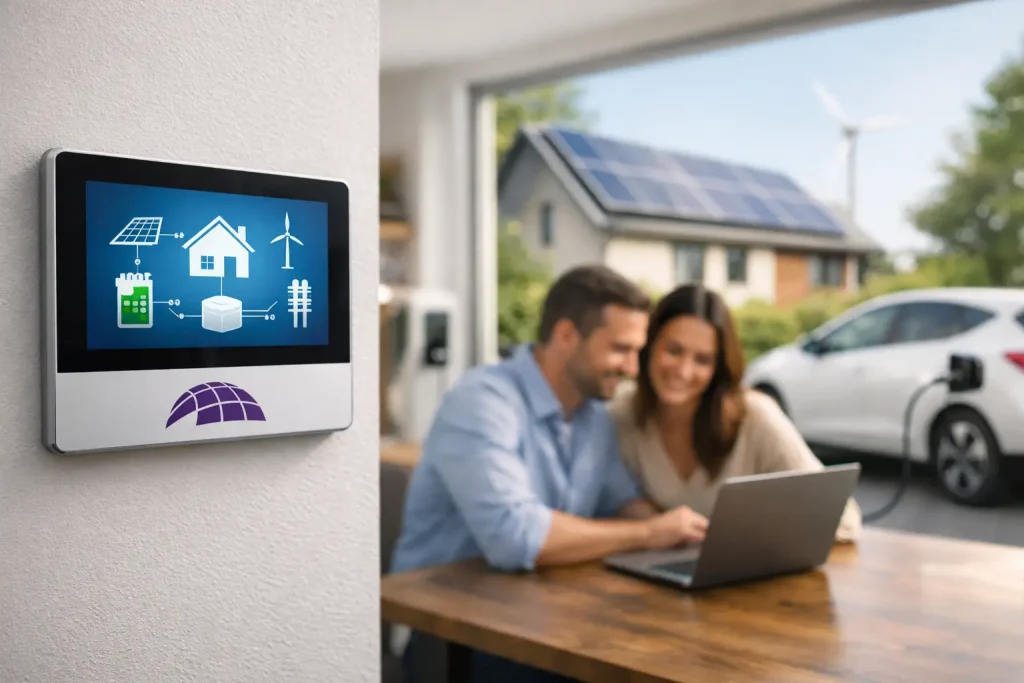
Home Energy Management System With ATAP Program
Key takeaways
A home energy management system with ATAP program does more than show your solar output. It helps a homeowner control when electricity is used, reduce grid dependence, improve self-consumption, and prepare the house for battery storage or EV charging. The best results come when the solar system, monitoring platform, load behavior, and approval pathway are planned together rather than treated as separate purchases.
A homeowner can install solar under the ATAP initiative and still miss a meaningful portion of the financial value if the house consumes electricity at the wrong time. That is the real case for a home energy management system with ATAP program – not just generating power, but managing it intelligently.
For higher-value residential properties in Malaysia, the issue is rarely whether solar works. It does. The better question is whether the home is using its solar production efficiently enough to justify the full investment. If daytime generation is high but household demand peaks in the evening, exported energy may not deliver the same value as energy consumed on-site. That gap is where energy management matters.
Why a home energy management system with ATAP program matters
The ATAP program supports residential rooftop solar adoption, which is a strong starting point. But solar panels alone are only one part of the energy equation. A home energy management system adds visibility and control over how electricity flows through the property.
In practical terms, that means the homeowner can see how much power the PV system is producing, how much the home is using, when demand spikes occur, and whether certain loads should be shifted to better time windows. If the home later adds battery storage, smart controls become even more valuable because charging and discharge behavior can be optimized instead of left to default settings.
This matters most in homes with larger air conditioning loads, pool systems, water heaters, EV charging, or multiple occupants with irregular schedules. These homes typically have enough complexity that unmanaged solar leaves money on the table.
What the system actually does
A home energy management system is not just an app. It is a coordinated setup that usually includes metering hardware, inverter data integration, a monitoring platform, and in some cases control logic for selected circuits or appliances.
At the basic level, the system tracks solar generation and household consumption in near real time. That already improves decision-making because homeowners can identify whether daytime production is being used directly or sent back out while heavy loads run later at night.
At a more advanced level, the system can support automated actions. For example, it may prioritize running certain appliances when solar production is strongest, or coordinate battery charging to reduce expensive grid imports during peak household usage periods. Some platforms also support historical reporting, performance alerts, and trend analysis, which becomes useful for spotting underperforming equipment or abnormal consumption.
The distinction is important. Monitoring tells you what happened. Energy management helps shape what happens next.
ATAP is the entry point, not the whole strategy
Many homeowners approach the ATAP program as a solar installation opportunity, which is reasonable. The risk is stopping the planning process there.
If the goal is only to offset part of the utility bill, a standard solar system may be enough. If the goal is stronger long-term bill control, better resilience, and a smarter home energy profile, then the system should be designed around actual consumption behavior. That includes load timing, circuit priorities, roof layout, inverter selection, and whether battery readiness should be built in from day one.
A well-designed residential project looks at more than panel count. It studies how the household uses electricity across the day and how that pattern may change over time. Families buy EVs, add home offices, install faster cooling systems, or increase occupancy. A rigid design can become outdated quickly. A managed system is more adaptable.
Financial returns depend on self-consumption
One of the biggest misunderstandings in residential solar is assuming that every kilowatt-hour generated creates the same value. It does not.
Electricity that is consumed directly within the home often delivers stronger savings than electricity exported when no one is using it. The exact economics depend on tariff structure, usage habits, and system design, but the principle is consistent. Solar performs best financially when generation and consumption are aligned.
That is why a home energy management system with ATAP program can improve project economics even when the solar array size stays the same. Better scheduling, better monitoring, and better load coordination can increase self-consumption without needing more roof space.
For homeowners evaluating payback, this is an important point. The return is not only about installed capacity. It is also about operational intelligence.
When battery storage makes sense
Not every residential solar system needs a battery on day one. In some homes, the payback may be better if the owner starts with PV plus energy management and adds storage later. In others, especially homes with high evening demand or a stronger resilience requirement, battery integration may make sense earlier.
The right answer depends on lifestyle, backup expectations, and budget. A battery can help store excess daytime solar for evening use, reduce grid imports, and support critical loads during outages if the system architecture allows it. But batteries add cost, and the financial case should be modeled carefully rather than assumed.
This is where a technology-led provider adds value. Good engineering is not just about selling more equipment. It is about matching control strategy, battery sizing, inverter capability, and household load profile so the system performs as intended.
What to look for in a provider
For residential clients seeking a complete solution, the installer should not behave like a panel supplier. The provider should be able to assess consumption patterns, explain approval requirements, design the electrical architecture properly, and present the economics in a way that is easy to test.
That includes system design and engineering, installation quality, testing, grid commissioning, monitoring setup, and support after energization. It also helps if the provider understands future expansion paths such as battery storage, EV charging, and advanced reporting.
This is one area where Amsolar’s engineering-led approach stands out. For homeowners who want more than a basic rooftop installation, a provider with monitoring, financial modeling, and smart energy control capability can reduce the risk of underperformance.
Common trade-offs homeowners should understand
The best system is not always the largest system. Oversizing PV without addressing daytime load behavior can lead to disappointing savings relative to expectation. On the other hand, undersizing may leave easy bill reductions unrealized.
There is also a trade-off between simplicity and control. Some homeowners want a system that runs quietly in the background with minimal interaction. Others want detailed dashboards, alerts, and granular control over specific devices. Neither approach is wrong, but the system should match the homeowner’s preference.
Cost is another variable. Entry-level monitoring gives visibility, while advanced management gives visibility plus action. The added value of advanced control is highest in homes with significant usage complexity. In a very simple household, the upgrade may be less dramatic.
Planning the system properly from the start
The strongest residential outcomes usually come from asking a few direct questions early. When does the house use the most electricity? Which loads are flexible and which are fixed? Is the owner planning for battery storage or EV charging? Does the family want bill savings only, or some level of energy resilience as well?
These questions shape design decisions that affect payback and long-term usability. A home with strong daytime occupancy may benefit from one strategy. A home that sits empty until evening may need another. A large landed property in Johor or Penang with multiple cooling zones may justify more sophisticated control than a smaller urban residence.
That is why residential solar should be treated as an energy system, not a hardware bundle. The value comes from how generation, usage, controls, and future expansion fit together.
The smarter way to think about residential solar
The ATAP program makes rooftop solar more accessible, but accessibility is only the first step. For homeowners who care about performance, the real objective is not simply producing clean electricity. It is lowering bills predictably, using more of what the roof generates, and building a home that can respond intelligently as energy needs change.
A home energy management system with ATAP program supports that outcome by turning solar from a passive asset into an actively managed one. That shift matters more as homes become more electrified and as owners expect clearer returns from every capital decision.
If you are planning a residential solar project, treat the monitoring and control layer as part of the core design, not an optional add-on after installation. That is often the difference between having solar on the roof and having a system that genuinely works for the way you live.

3 Comments
Solar Yield Assessment for Smarter Home Systems - Amsolar
[…] generation totals. They connect solar production with household usage patterns. When paired with home energy management, that visibility can guide practical changes, such as shifting flexible loads into solar hours or […]
Solar Inverter Versus Microinverter for Homes - Amsolar
[…] use, solar production, and household consumption, inverter selection should sit within a wider home energy management plan. Production data alone does not show when air conditioning, electric vehicle charging, or other […]
Best Solar Data Dashboards for Smarter Homes - Amsolar
[…] Tuya-based Home Energy Management System can extend this approach by connecting compatible smart devices and automations. For example, […]