
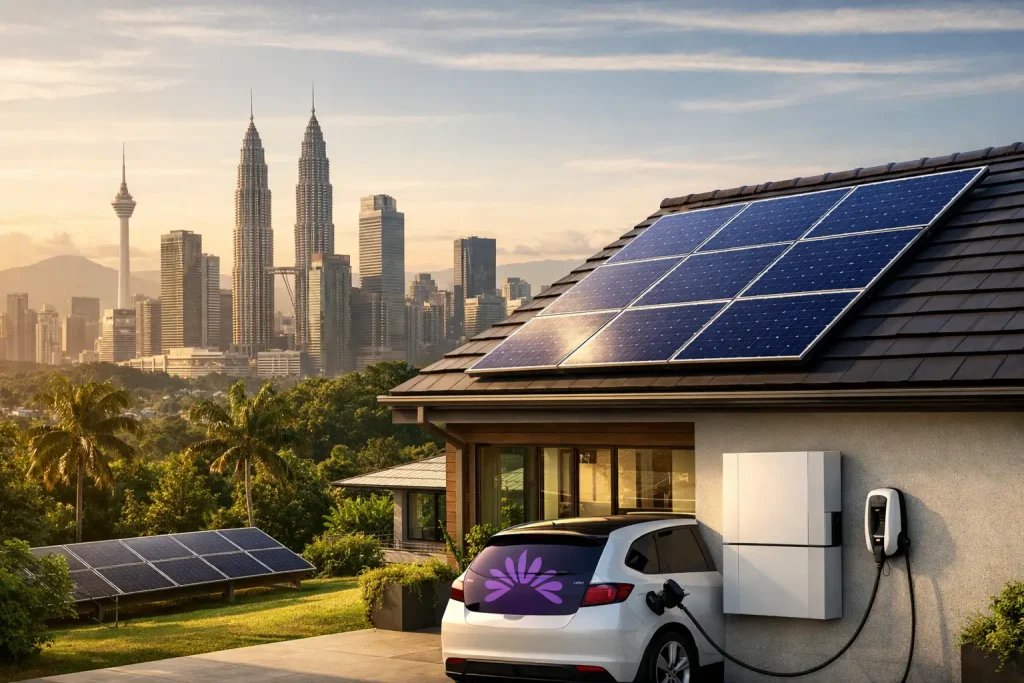
Best Home Solar Upgrades in Malaysia for 2026
Key takeaways: The best home solar upgrades Malaysia homeowners can make are not always the largest systems. A properly sized solar PV system, eligibility planning for Suria RM3K, real-time home energy monitoring, and battery-ready design can produce stronger long-term value. The right combination depends on your roof, household consumption pattern, future electricity needs, and investment priorities.
A large detached home with high daytime air-conditioning use can have very different solar economics from a terrace house where everyone leaves for work at 8 a.m. That is why the best home solar upgrades Malaysia homeowners should consider begin with energy behavior, not panel count. For high-value homeowners, the objective is not simply to install solar. It is to build a measured, dependable home energy system that lowers purchased electricity while remaining ready for future technologies and changing household demand.
Start With a Right-Sized Solar PV System
Solar PV remains the foundation of a home energy upgrade, but oversizing is not automatically better. A well-engineered system considers available roof area, roof orientation, shading from nearby buildings or trees, historical utility bills, and when the household uses electricity.
A family that consumes most electricity during daylight hours can usually gain more direct value from solar generation than a household with low daytime occupancy. Pool pumps, daytime cooling, home offices, electric cooking, and smart appliances can all increase daytime self-consumption. This is often more valuable than selecting panels based solely on maximum wattage.
System design also needs to account for practical site conditions. Roof structure, waterproofing details, cable routing, inverter placement, and safe access for maintenance matter as much as the modules themselves. A lower-cost proposal may look attractive if it only compares panel capacity, but it may not include the engineering scope needed for reliable long-term performance.
For homeowners planning renovations, electric vehicle charging, or additional air-conditioning, it can be sensible to allow for future demand. However, the design should be backed by consumption data and financial modeling rather than assumptions.
Use Suria RM3K and Available Programs Carefully
Government incentives can improve project economics, but a rebate should not determine whether a system is technically suitable. Suria RM3K is a residential solar rebate program available in Malaysia through December 2026, subject to applicable terms, eligibility, and program requirements. For eligible homeowners, it can reduce the upfront cost of installation and shorten the expected payback period.
Programs such as ATAP and Plug In Solar may also affect how a residential solar project is structured. Requirements, quotas, administrative processes, and grid-related conditions can change. Homeowners should therefore evaluate the full project economics: estimated generation, expected self-consumption, financing cost if applicable, maintenance expectations, and the value of any approved incentive.
A competent provider should support the submission process while making the assumptions clear. The goal is not to promise a generic savings figure. It is to provide a realistic estimate based on your home, electricity use, tariff position, and approved system configuration.
Add Home Energy Monitoring Before Chasing More Hardware
Many homes waste electricity after solar is installed because the owner cannot see when energy is generated, consumed, or exported. A home energy management system turns solar from a passive rooftop asset into an operating system for household electricity.
With Tuya-based monitoring and control, homeowners can view consumption patterns and make better decisions about controllable loads. For example, cooling schedules, water heaters, pool equipment, and selected appliances can be timed to operate when solar output is strongest. The savings may not come from generating more electricity, but from buying less electricity at the wrong time.
Monitoring also helps identify abnormal consumption. A sudden rise in overnight load, an inefficient air-conditioning unit, or equipment that remains on unnecessarily is easier to address when the data is visible. For a premium home, this is a practical upgrade that adds control without requiring major construction work.
Make the System Battery-Ready, Even If You Wait
A battery energy storage system can provide greater control over solar energy, especially for households with meaningful evening consumption or a requirement for backup power. Yet batteries are not the correct first upgrade for every homeowner. Their value depends on battery cost, electricity use after sunset, desired backup duration, critical loads, and the ability to optimize charging and discharging.
For some homes, the strongest initial investment is solar PV plus monitoring, with electrical provisions made for a future battery. This can include selecting compatible inverter architecture, reserving installation space, planning switchboard capacity, and identifying which circuits would be prioritized during an outage.
For homes where resilience is essential, battery design should go beyond a headline capacity number. A properly designed solution distinguishes between whole-home backup and essential-load backup. Air-conditioning, pumps, refrigeration, security systems, internet equipment, and lighting place very different demands on a battery. The right system balances power output, usable storage, charging strategy, and safety requirements.
Battery readiness is valuable because it preserves options. As household demand changes or storage economics improve, the solar system can be expanded with less disruption and better technical integration.
Choose Turnkey Engineering, Not a Panel-Only Quote
Residential solar is a long-term electrical asset connected to your home and the grid. The quality of design, procurement, construction, testing, commissioning, and monitoring directly affects performance and peace of mind.
When comparing proposals, look beyond the advertised panel brand and total kilowatts. Ask how roof loading and waterproofing will be handled, what production assumptions were used, how shading was assessed, what monitoring is included, who manages regulatory submissions, and what happens if the system underperforms or reports a fault.
Amsolar approaches residential projects as complete energy systems, combining PV engineering, commissioning support, monitoring, and financial analysis. For homeowners considering storage, smart controls, or future electrification, this integrated approach can prevent incompatible equipment choices and costly rework later.
The best upgrade is the one that matches how your household actually lives. Start with twelve months of electricity data, identify your daytime loads and future plans, then invest in a system that can be measured, managed, and expanded with confidence.
