
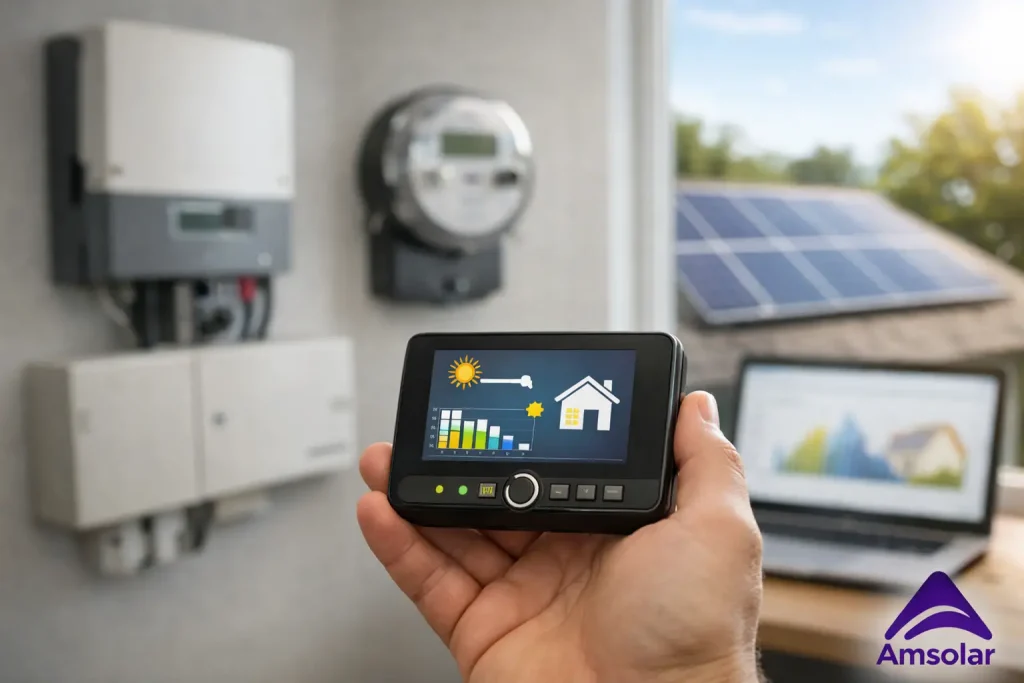
Energy Meters for Smarter Home Solar Decisions
Key takeaways
- Energy meters show when and where a landed home consumes electricity, not just the total monthly bill.
- Good interval data helps right-size plug-in solar, rooftop PV, and battery storage around actual household demand.
- The most useful setup measures both whole-home consumption and solar generation, then presents the data clearly.
- Monitoring is valuable only when it informs practical decisions, such as shifting heavy loads or managing battery use.
A home can have a respectable solar system and still miss savings because its production and consumption happen at different times. Energy meters make that mismatch visible. They measure electricity moving through a circuit or connection point, turning an unclear utility bill into a practical picture of how a household uses power through the day.
For owners of landed homes considering balcony or car-park plug-in solar, a larger rooftop system, or home battery storage, that picture matters. It helps answer the questions that should come before equipment selection: How much power does the home use during daylight hours? Which appliances create the highest peaks? Is a battery likely to serve a real evening demand, or sit underused?
What an energy meter actually measures
An energy meter records electrical energy consumption, commonly in kilowatt-hours (kWh). Depending on the model and installation point, it can also show real-time power demand in kilowatts (kW), voltage, current, power factor, and the direction of energy flow.
That last point is particularly useful in a solar home. A bidirectional meter can distinguish between electricity drawn by the home and solar electricity produced or sent outward. A generation meter tracks PV output, while a consumption meter reveals what the home is using. Together, they show the self-consumption rate: the portion of solar generation used directly by household loads.
A standard monthly bill provides a total. It does not show whether air conditioning runs hardest after sunset, whether a pool pump operates during strong solar hours, or whether an electric vehicle charges when household demand is already high. Interval data, captured every few minutes or every half hour depending on the system, provides the operating detail that totals conceal.
Why timing matters more than monthly usage
Two homes may each use 900 kWh a month yet need very different energy solutions. One household may work from home, run air conditioning during the afternoon, and consume much of its solar output directly. Another may be empty all day and return to a concentrated evening load. Their monthly consumption looks identical, but their solar economics and battery priorities do not.
Energy meters identify the home’s load profile. This is the pattern of consumption across hours, days, and seasons. It is the foundation for sensible system design because solar panels generate most strongly in daylight, while many household loads occur early in the morning or after work.
For plug-in solar users, this insight prevents a common mistake: judging performance only by how much a panel produces. The better question is how much of that production the home can use at the moment it is generated. A smaller system aligned with daytime base loads may deliver more useful savings than an oversized setup producing power when demand is low.
For a full solar and battery system, load profiling helps determine whether storage should focus on evening use, backup support for selected circuits, or peak-demand management. The answer depends on the household, not on a generic battery size.
Where to place energy meters in a solar home
The meter location determines the question it can answer. A whole-home meter at the main incoming supply provides the broadest view of consumption. It is the right starting point for homeowners who want to understand total demand and identify daily peaks.
A solar generation meter measures what the PV system produces before that energy is used by the home. Comparing generation and whole-home consumption shows when solar output covers household load and when the home needs additional electricity.
Submeters can add useful detail when a major circuit dominates consumption. Air conditioning, an EV charger, a water heater, or a workshop circuit may justify separate monitoring. However, more data is not automatically better. Submetering should serve a decision, such as scheduling a high-load appliance during daylight hours or checking whether a proposed battery capacity matches evening use.
A practical monitoring design usually starts with whole-home consumption and solar production. Add circuit-level monitoring only when a significant load needs closer control. This keeps the system easier to interpret and prevents homeowners from paying for data that does not change an action.
From meter data to lower operating costs
The value of metering is not the dashboard. It is the decisions made from the dashboard.
If energy data shows a reliable afternoon surplus, loads such as pool pumps, laundry, or EV charging may be scheduled to run during solar production. If it shows repeated high evening demand, the homeowner can assess whether battery storage is justified and what capacity would be useful. If a sudden consumption pattern appears, the data can point to an appliance, schedule, or equipment issue worth investigating.
This is also where intelligent control becomes relevant. A home energy management system can combine meter readings with solar output, battery state of charge, and household priorities. Rather than relying on guesswork, it can help direct available solar power to suitable loads and manage battery charging and discharge based on real usage patterns.
There are trade-offs. Real-time data is engaging, but homeowners do not need to watch it all day. The most effective systems provide simple alerts, clear trends, and reporting that makes the next action obvious. Data accuracy, reliable connectivity, and correctly installed current sensors matter more than elaborate graphics.
Choosing a meter setup that supports future upgrades
A meter should fit the home’s current needs while leaving room for future solar, battery, and smart-load upgrades. For a household beginning with plug-in solar, a clear view of base load and daytime consumption is often enough to establish whether additional PV capacity makes sense. For a home planning a larger installation, monitoring should be considered during the design stage rather than treated as an afterthought.
Look for a system that can distinguish consumption from generation, provide historical interval data, and present results through a reliable cloud-based platform. Compatibility with future battery storage and home energy management is also worth considering, especially where homeowners expect their energy needs to change with EV ownership, expanded air conditioning, or work-from-home routines.
Amsolar approaches monitoring as part of an engineered energy solution, connecting system design, performance reporting, and control options around measurable household outcomes. The objective is not to install more equipment than necessary. It is to make sure each component has a defined role in reducing waste and improving how the home uses electricity.
A well-placed energy meter gives a homeowner something more useful than a monthly total: evidence. Start by measuring the home’s real demand, then let that pattern guide the next solar or battery decision.
