
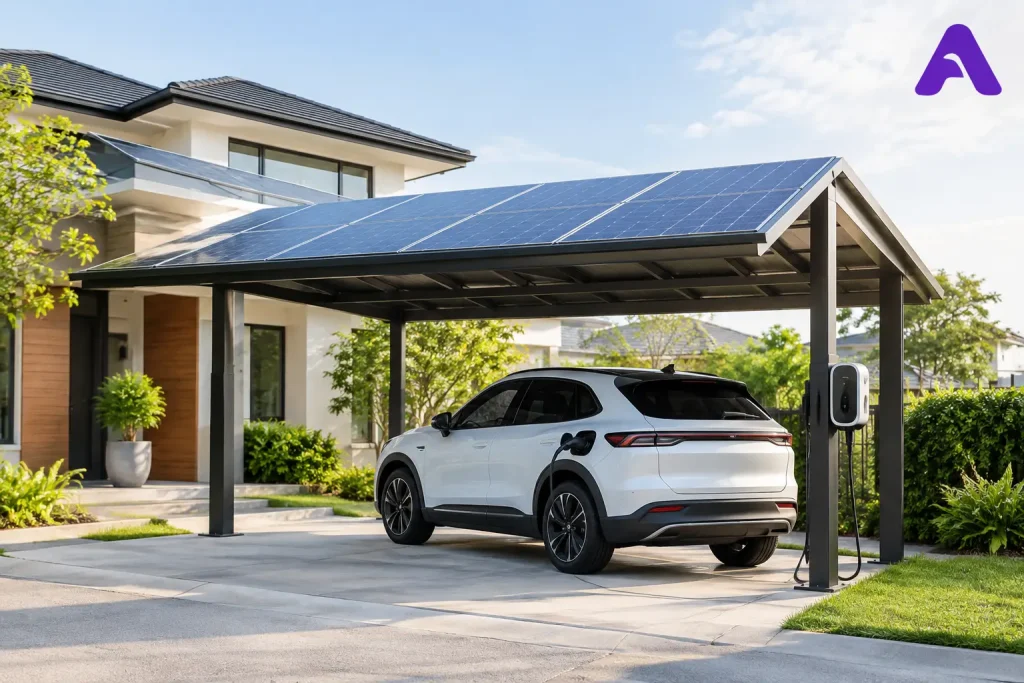
Plug In Solar Carport Example for Landed Homes
A plug in solar carport example makes the first step into solar easier to picture: the same structure that shelters a vehicle can produce daytime electricity, reduce heat at the parking area, and provide a visible starting point for smarter home energy use. For landed homeowners, this approach can be particularly practical when the main roof has shading, limited usable space, or is simply not the preferred place to begin.
Key takeaways
- A carport solar installation can turn an underused parking cover into a power-generating surface while improving shade and comfort below.
- The best plug-in solar carport layout depends on carport orientation, available clear roof area, household daytime consumption, and shading throughout the day.
- Small systems are a sensible entry point, but panel placement, electrical protection, structural condition, and monitoring still require professional assessment.
- Real value comes from matching solar generation to actual usage, then using data to decide whether a larger PV system or battery storage is justified.
What a Plug In Solar Carport Example Looks Like
Consider a typical two-car landed-home carport with a metal deck or solid canopy. The homeowner parks at work during the day, but the house still has daytime loads from refrigeration, internet equipment, air conditioning, water pumps, and appliances. A compact plug-in solar setup can use the carport canopy as its mounting surface rather than requiring a full rooftop installation from day one.
A practical example may use four solar panels arranged in a clean rectangular layout above the parking bays. Depending on the panel rating and usable space, this could provide roughly 1.8 kWp to 2.2 kWp of solar capacity. The panels feed a suitable inverter configuration, while generation data is displayed through an app or home energy monitoring platform.
The result is not just a set of panels on a carport. It is a small, measurable energy asset. During clear daytime hours, the system helps offset electricity being used inside the home. The carport gains another function as well: its panel layer reduces direct sun exposure on the vehicles and can lower the heat felt beneath the structure.
This is different from treating solar as a one-time equipment purchase. The system should be designed around how the home uses power, what the carport can safely support, and whether the owner expects to expand into a larger rooftop PV system, battery storage, or a connected home energy management system later.
Why the Carport Can Be the Right Starting Point
For many landed properties, the carport is easier to access and visually simpler to assess than a complex roof. It can also be a strong option when the main roof has multiple angles, frequent obstructions, or shade from neighboring buildings and mature trees. A carport with open sky exposure can provide a more predictable surface for a compact solar array.
The carport route is not automatically better than a rooftop system. It depends on orientation and shade. A broad carport facing strong morning or afternoon sun may be useful, but a canopy that is shaded for several hours by a porch, tree, or adjacent building will produce less than its panel capacity suggests. A detailed shading review is more valuable than choosing a layout based on panel count alone.
There is also an architectural consideration. Solar panels should look intentional, not improvised. Panel edges, mounting lines, cable routes, and drainage must be coordinated with the existing structure. A clean design protects the visual quality of the home and makes future maintenance easier.
For homeowners who are still evaluating a larger investment, plug-in solar offers a controlled starting point. It gives the household real generation data before committing to a broader solar and storage strategy.
Design Decisions That Determine Performance
A high-performing carport system begins with the structure. The canopy must be assessed for condition, mounting suitability, and its ability to carry the intended solar array. This is especially relevant for older carports, lightweight awnings, or structures that have been modified over time. The engineering decision is not simply whether panels fit. It is whether the mounting approach will remain secure and weather-resistant over years of heat, rain, and wind exposure.
Panel orientation and tilt are the next decisions. A perfectly aligned array is not always possible on an existing carport, and that is acceptable. The goal is to balance solar access, structural practicality, water runoff, appearance, and expected energy yield. In some cases, a slightly less ideal orientation is still the better overall design because it avoids major modifications to the carport.
Electrical design deserves the same discipline. Outdoor cabling, connection points, equipment placement, and safety components should be planned as a system, not added after the panels are mounted. The setup should be neat, protected from weather and accidental contact, and accessible for inspection and servicing.
Monitoring turns the installation into an informed decision-making tool. Generation data can show how much power the carport produces at different times of day. When paired with household consumption information, it reveals whether the home is using that solar power directly or whether the next improvement should focus on load scheduling, added PV capacity, or battery storage.
Turning a Small System Into a Smart Energy Plan
The most useful plug-in solar carport example is one that has a clear next step. A homeowner may begin with a compact carport array to reduce selected daytime loads. After several months of monitored performance, the data may show strong daytime self-consumption and justify expanding solar capacity. Alternatively, it may reveal that the largest electricity demand occurs after sunset, making battery storage a more relevant future consideration.
This is where financial modeling matters. Panel capacity alone does not define savings. The stronger question is how much solar generation is consumed at the moment it is produced. A household with regular daytime air-conditioning, home office equipment, appliance use, or charging loads may receive a different outcome from the same carport system than a household that is empty all day.
Smart controls can improve this match. A home energy management system can help homeowners see consumption patterns and make better decisions about when to run selected loads. For a more advanced setup, energy controls can prioritize how available solar power is used across the home. The objective is practical: reduce avoidable grid consumption without making daily life inconvenient.
Amsolar approaches solar as an engineered energy solution rather than a panel-only installation. That means assessing the site, defining expected performance, organizing the system for monitoring, and helping owners understand the financial case for each next phase. For a carport installation, this capability is valuable because the project often sits at the intersection of structural design, electrical planning, and future energy expansion.
When a Carport Solar Setup May Not Be the Best Fit
A solar carport is not the right answer for every landed home. If the carport is heavily shaded, structurally weak, very small, or positioned where panel placement would create poor access or drainage issues, a rooftop array may offer better value. Likewise, homeowners with high electricity use may find that a compact carport system is helpful but insufficient as their primary solar strategy.
It is also worth separating shade benefits from electricity savings. Panels above a carport can make the area more comfortable, but cooling vehicles is not the same as maximizing solar production. The best design weighs both outcomes honestly rather than promising that one small array will solve every energy need.
For owners planning renovations, electric vehicle charging, or a larger future PV system, the carport should be reviewed as part of the whole property energy plan. Planning cable pathways, equipment locations, monitoring, and potential expansion early can prevent unnecessary rework later.
A well-designed carport solar project should make the home more useful from the first day, while leaving room for better energy decisions as real usage data becomes available. Start with the surface you already own, measure the results, and let the next investment be guided by performance rather than assumptions.
