
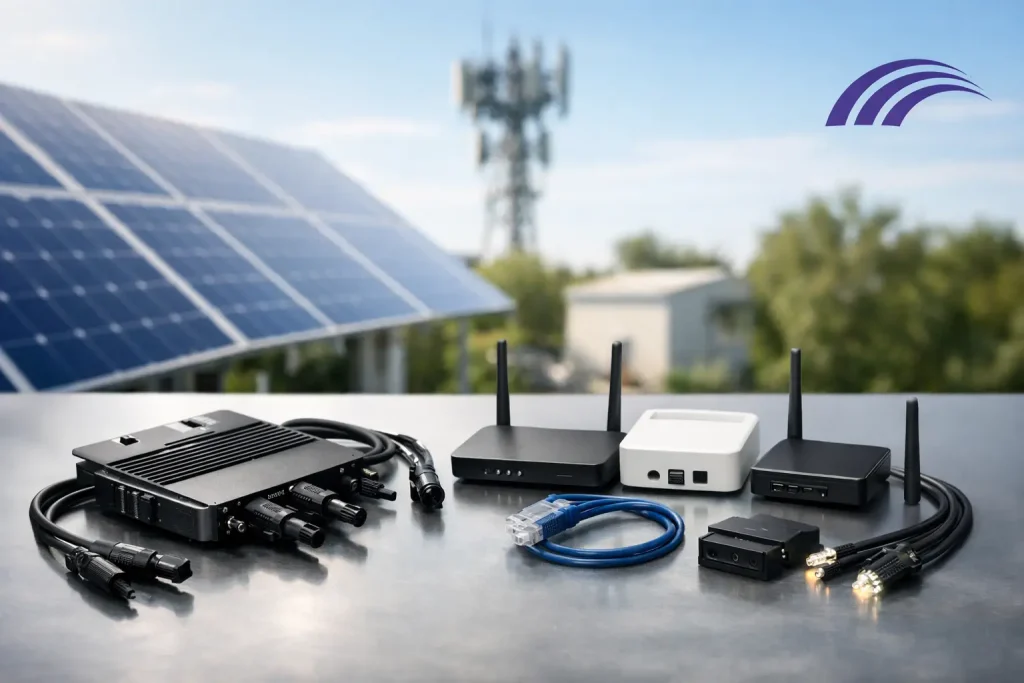
Micro Inverters Communication Protocol Comparison
Key takeaways
- Communication protocol affects monitoring reliability, fault detection, and how easily a solar system can expand.
- Power-line communication is convenient but can be affected by electrical noise and circuit layout.
- Wireless systems can provide flexible data transfer, but range, interference, and gateway placement matter.
- For landed homes, choose a system based on the quality of monitoring data and local support, not protocol names alone.
A micro inverters communication protocol comparison matters because a solar system is only as visible as its data. A homeowner may see panels producing electricity on the roof or carport, but the monitoring platform determines whether they can identify a weak module, confirm daily generation, and understand how solar is offsetting household consumption.
For plug-in solar and small residential systems, this distinction is often overlooked. Buyers commonly focus on panel wattage and inverter output, then treat monitoring as an extra. In practice, communication between each microinverter, the gateway, and the cloud platform determines how quickly issues can be found and whether the system remains easy to manage as energy needs grow.
What Microinverter Communication Actually Does
Each microinverter converts DC electricity from an individual solar panel into AC electricity. It also collects operating data, such as production, voltage, temperature, and system status. That data must travel from the microinverter to a local gateway or data collection unit, then onward to a monitoring app or cloud portal.
The communication protocol is the method used for that first connection. It does not directly make a panel generate more electricity. Its value is operational: dependable communication gives homeowners and installers a clearer picture of performance, while poor communication can leave a healthy-looking dashboard with missing or delayed information.
For a landed home with panels on a balcony, carport, or roof, the practical questions are straightforward. Will the gateway receive data from every microinverter? Can it distinguish one underperforming panel from the rest? Will the signal remain stable after the home adds appliances, Wi-Fi equipment, or more solar capacity?
Power-Line Communication: Convenient but Circuit-Dependent
Power-line communication, often called PLC, sends data through the same AC wiring that carries electricity from the microinverters. This approach can reduce the need for a separate wireless signal path between the roof and the gateway.
Its strongest advantage is installation simplicity. Since the inverter is already connected to the AC circuit, the communication pathway can use existing electrical conductors. In a well-designed installation with a clean circuit layout, PLC can provide reliable module-level reporting without requiring each microinverter to maintain a radio connection.
The trade-off is that electrical wiring is not always a quiet data environment. Some appliances, chargers, motors, LED drivers, and power electronics can introduce electrical noise. Circuit distance, distribution board configuration, and cable routing may also influence communication quality. A large home with separate circuits for a carport, roof area, and main house can require more careful engineering than a compact installation.
PLC is a sensible choice when the system design keeps the solar circuits organized and the installer has experience validating signal quality during commissioning. It should not be selected on the assumption that using wires automatically eliminates communication problems.
Wireless Protocols: Flexible, With Placement Considerations
Wireless microinverter communication commonly uses proprietary radio systems, sub-GHz frequencies, Wi-Fi, or mesh-style networks. Rather than sending data through AC cables, each unit transmits information through the air to a gateway.
A lower-frequency wireless system can be effective across longer distances and may pass through some building materials better than standard Wi-Fi. This makes it useful where solar panels are installed on a detached carport or spread across different roof planes. Mesh-based designs can also allow nearby devices to support the broader network, depending on the manufacturer’s architecture.
Wi-Fi is familiar to homeowners because it connects directly to the home internet network. However, familiar does not always mean best suited for rooftop equipment. Wi-Fi range can drop sharply through reinforced concrete walls, metal roofing, insulation, and distance. A router located inside the home may not provide dependable coverage at a carport or far roof edge.
Wireless systems also share the radio environment with home networks, smart devices, cameras, and neighboring signals. Good gateway placement is therefore essential. The gateway should be positioned where it can communicate consistently with the microinverters while maintaining a stable internet connection. In some homes, this may mean adding a dedicated network extender or locating the data unit closer to the solar array.
Comparing Protocols for a Residential Solar System
There is no universal winner between PLC and wireless communication. The better choice depends on the building, solar layout, electrical design, and monitoring expectations.
PLC can suit homeowners who want a contained system with communication carried through solar wiring. It can be particularly practical when roof access is difficult and the electrical route to the gateway is direct. Wireless communication can suit layouts where panels are distributed across a roof and carport, or where electrical circuit separation makes power-line data transfer less predictable.
The more useful comparison is not simply wired versus wireless. Evaluate the whole monitoring architecture. Ask whether the platform reports production at panel level, how often data updates, whether it retains data during an internet outage, and how quickly a communication fault is identified. A platform that reports only total system output may not reveal a shaded, dirty, or malfunctioning panel until the production loss becomes significant.
For plug-in solar users, monitoring should also be understandable. The best dashboard does not overwhelm the homeowner with technical codes. It should show current power, daily energy, historical trends, and alerts in a way that supports better energy habits. When paired with a home energy management system, solar data becomes more valuable because generation can be viewed alongside household consumption patterns.
What to Ask Before Selecting a Microinverter System
A microinverter specification sheet may describe a protocol in technical terms, but the installation team should translate that into real operating outcomes. Start by asking how the gateway communicates with every inverter and where it will be installed. Then ask how the system handles a lost signal, a temporary internet interruption, or the addition of new panels later.
It is also worth asking whether monitoring identifies individual module performance or only total output. Module-level visibility is especially useful for carports and roofs with partial shading from trees, neighboring structures, or changing sun angles. A single weak panel should not remain hidden inside an otherwise acceptable total production figure.
Finally, consider serviceability. A good system is not just one that communicates on day one. It should allow an experienced team to diagnose whether an issue is caused by the panel, microinverter, gateway, home network, or electrical path. That distinction saves time and prevents unnecessary component replacement.
Amsolar approaches residential solar as an energy system rather than a collection of hardware. For homeowners starting with plug-in solar, choosing a communication architecture that supports clear monitoring today can make future expansion, energy management, and performance optimization far easier.
The right protocol is the one that remains dependable in your actual home, not the one with the most impressive acronym. Prioritize a properly engineered signal path, useful module-level data, and a monitoring platform you will genuinely use after installation.
