
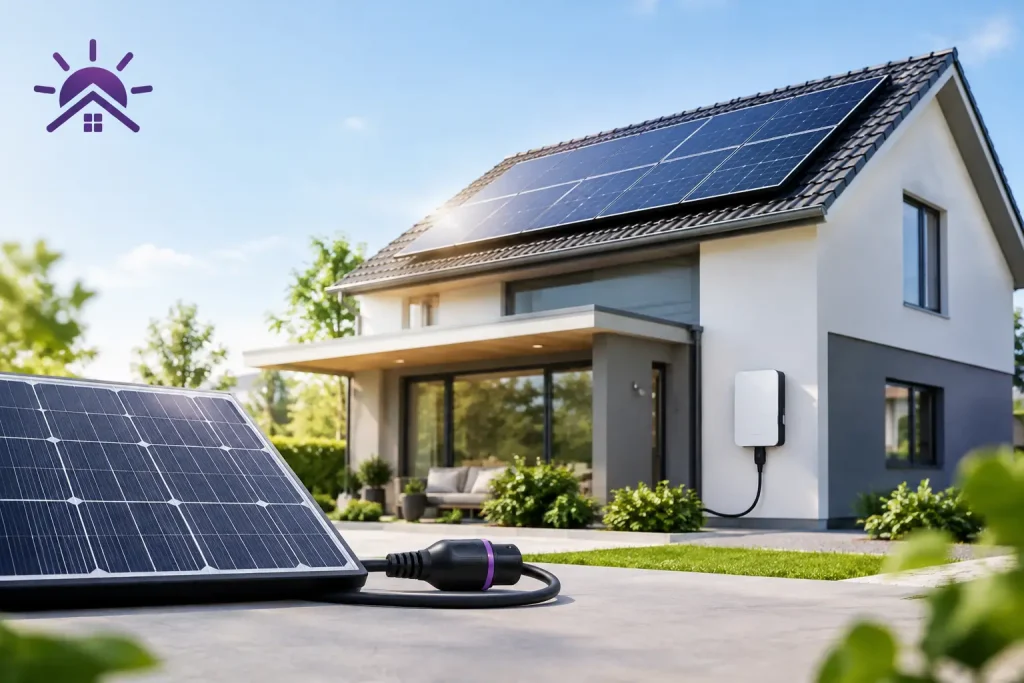
How Plug In Solar Works for Landed Homes
Key takeaways
- Plug-in solar converts sunlight into electricity that your home uses first during the day, reducing the power drawn from the grid.
- It is best suited to landed homes with usable balcony, roof, or carport space and consistent daytime electricity demand.
- A plug-in solar system is not a whole-home backup system. When the grid is unavailable, its solar output stops unless it is designed with battery-backed capability.
- Panel placement, shading, circuit design, and monitoring determine whether the system delivers meaningful savings rather than simply generating power on paper.
A shaded car porch, an unused balcony edge, or a compact roof section can become the starting point for lower daytime electricity use. Understanding how plug in solar works helps homeowners assess whether that space can produce useful energy for real household loads, rather than treating solar as a one-size-fits-all purchase.
For landed homes, plug-in solar is a practical entry point into distributed energy. It is typically smaller and faster to deploy than a full rooftop solar installation, but it still requires sound electrical design, secure mounting, and a clear view of when your household consumes electricity. The best result is not the largest panel count. It is solar generation that closely matches the loads already running in your home.
How plug in solar works at the electrical level
A plug-in solar system begins with photovoltaic panels. The panels generate direct current, or DC, when sunlight reaches their cells. Homes use alternating current, or AC, so the DC electricity must be converted before it can serve common household equipment such as refrigerators, Wi-Fi routers, lighting, fans, and selected appliances.
That conversion is handled by an inverter, often a microinverter installed close to the panel. The inverter produces AC electricity that is synchronized with the home’s electrical supply. Once connected through a properly designed circuit, the solar electricity flows to active loads in the house first.
Picture a home with a refrigerator, internet equipment, ceiling fans, and daytime air-conditioning running. If the plug-in solar system is generating power at that moment, part of those loads can be supplied by solar instead of electricity imported from the grid. The utility meter records less imported energy, which is where the financial value begins.
Solar output changes throughout the day. It rises after morning sunlight reaches the panels, peaks around the strongest sun, and falls toward evening. It also changes with cloud cover, panel temperature, dirt buildup, and shading from trees, neighboring buildings, roof structures, or parked vehicles.
This is why a plug-in system should be considered an energy-offset solution, not a constant power source. It reduces purchased electricity when solar production and household demand occur at the same time.
Where plug-in solar delivers the strongest value
Plug-in solar is most useful for homes with a reliable daytime electrical base load. Even when nobody is at home, many properties continuously consume energy through refrigeration, security systems, internet devices, water pumps, standby appliances, and smart-home equipment. Homes with daytime occupancy, work-from-home schedules, or regular air-conditioning use may have even more opportunity to consume solar power as it is generated.
For landed properties, a carport can be particularly attractive because it may provide an open surface with fewer obstructions than a complex roofline. Balcony-mounted systems can also work where there is direct sun and a structurally appropriate mounting location. The right choice depends on orientation, available area, shading patterns, and whether the mounting position remains exposed to sunlight for enough of the day.
A larger system is not automatically a better investment. If solar production regularly exceeds the loads operating at the property, the additional generation may offer less immediate value. A properly sized installation starts with electricity consumption data and a realistic estimate of daytime demand.
This is where energy monitoring adds value. Instead of guessing when the home uses power, homeowners can identify the demand profile by hour. That makes it easier to size solar capacity, shift flexible loads into daytime hours, and measure actual results after installation.
What a plug-in system can and cannot do
A plug-in solar system can lower daytime electricity purchases. It can support regular household consumption and make productive use of underused carport, balcony, or roof space. It can also serve as a sensible first step for homeowners who want to understand their energy profile before considering a larger solar array or battery energy storage system.
It cannot create electricity after sunset. It also should not be viewed as an emergency power source by default. Grid-connected solar inverters are designed to stop producing electricity when the grid is unavailable. This safety feature prevents power from feeding into electrical lines during an outage.
If backup power is a priority, the system architecture must be planned differently. Batteries, a compatible inverter, and defined backup circuits can keep selected loads operating when grid power is interrupted. Those loads might include lighting, internet equipment, a refrigerator, security devices, or a small number of essential outlets. Running an entire home, especially heavy air-conditioning or high-demand equipment, requires more storage capacity and a stronger system design.
There is also a practical distinction between a compact plug-in solar installation and an improvised consumer device. Panels must be securely mounted, cables protected from weather and physical damage, and electrical connections engineered for the site. A professional installation protects both performance and long-term reliability.
Getting more from plug-in solar every day
The simplest way to improve solar value is to use more electricity during solar-producing hours. This does not mean changing every household habit. It means moving flexible consumption where practical. Schedule a washing machine, run a pool pump, charge selected devices, or cool occupied rooms during periods when solar output is strongest.
A home energy management system can make these decisions more visible. Real-time monitoring shows solar production, household consumption, and the amount of electricity still being imported. With Tuya-based home energy management capability, homeowners can use data to identify recurring waste and make informed changes to appliance schedules.
Maintenance is equally practical. Panels need a clear view of the sun. Dust, leaf debris, bird droppings, and new shading can reduce output over time. Periodic visual checks and performance monitoring help detect whether production has fallen below expectation.
Amsolar approaches this with an engineering-first view: assess the usable space, evaluate the electrical load, select components that fit the application, and monitor the energy outcome. That process matters because the difference between a well-matched system and a poorly placed one is visible in monthly electricity usage, not just in panel specifications.
The most useful next step is to look at your home’s daytime electricity pattern before selecting equipment. When solar generation is designed around the loads you already have, plug-in solar becomes a practical tool for controlling energy costs and building toward a smarter home energy system.
